TCFD Reporting Explained: From Climate Risk to Financial Impact
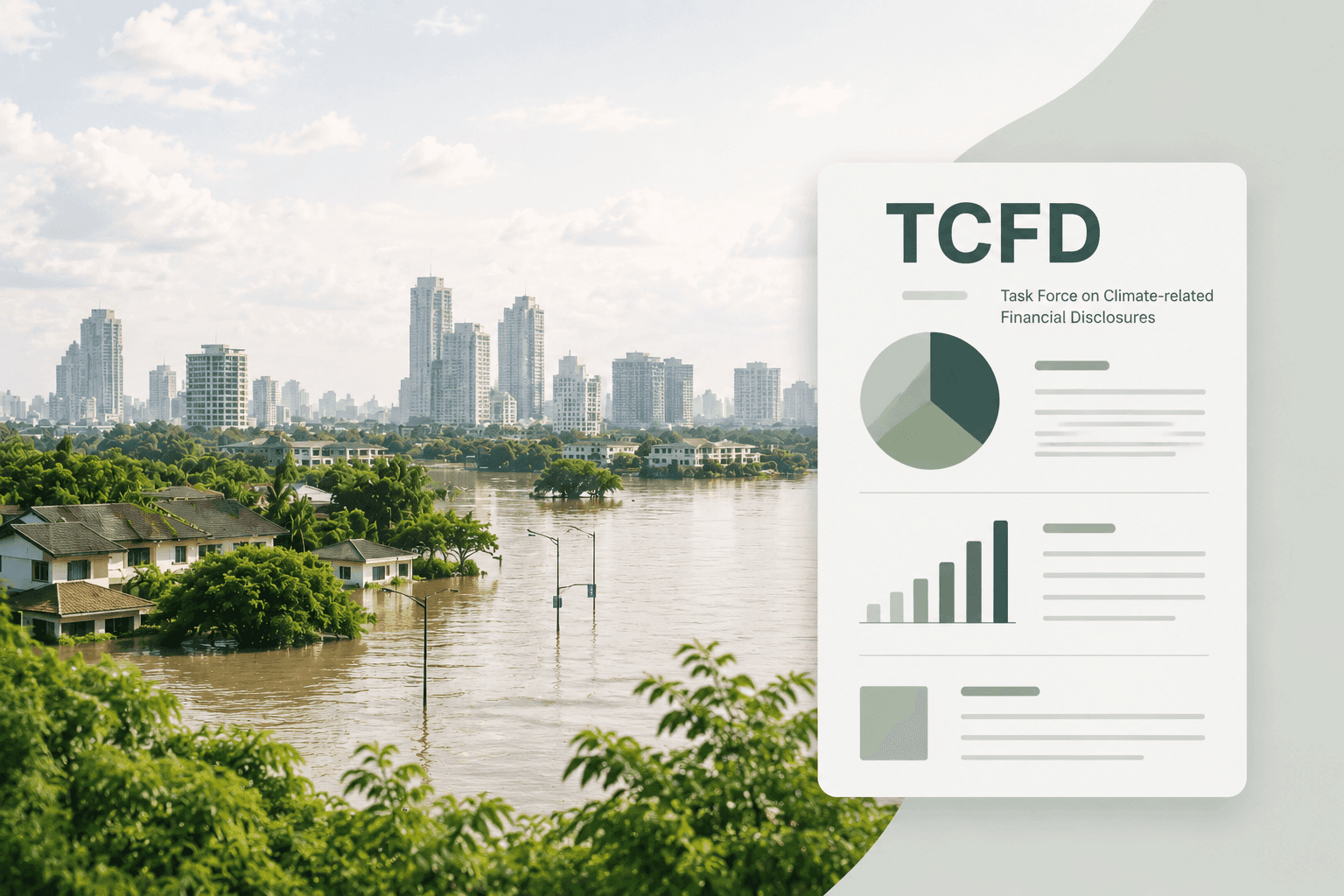
Why identifying climate risk is not the same as acting on it
Most organisations today are capable of describing their climate risks. Disclosures aligned with global frameworks increasingly outline transition risks, physical risks, governance structures, and long-term climate scenarios with greater clarity. Metrics are tracked, reporting standards are evolving, and climate risk visibility has improved significantly. Yet business decisions often remain unchanged.
This reflects one of the central challenges within climate reporting today: while disclosure has improved, integration into financial and operational decision-making remains inconsistent. The gap does not primarily lie within disclosure frameworks themselves, but in how climate risk is translated into measurable financial impact.
The Task Force on Climate-related Financial Disclosures was established to bring climate risk into mainstream financial thinking by helping organisations assess and communicate how climate change may affect strategy, operations, and long-term financial performance. Like many reporting frameworks, however, TCFD improves clarity but does not automatically create action. Climate risk is increasingly visible, but it is still not consistently actionable.
Climate risk is now visible, but not always actionable
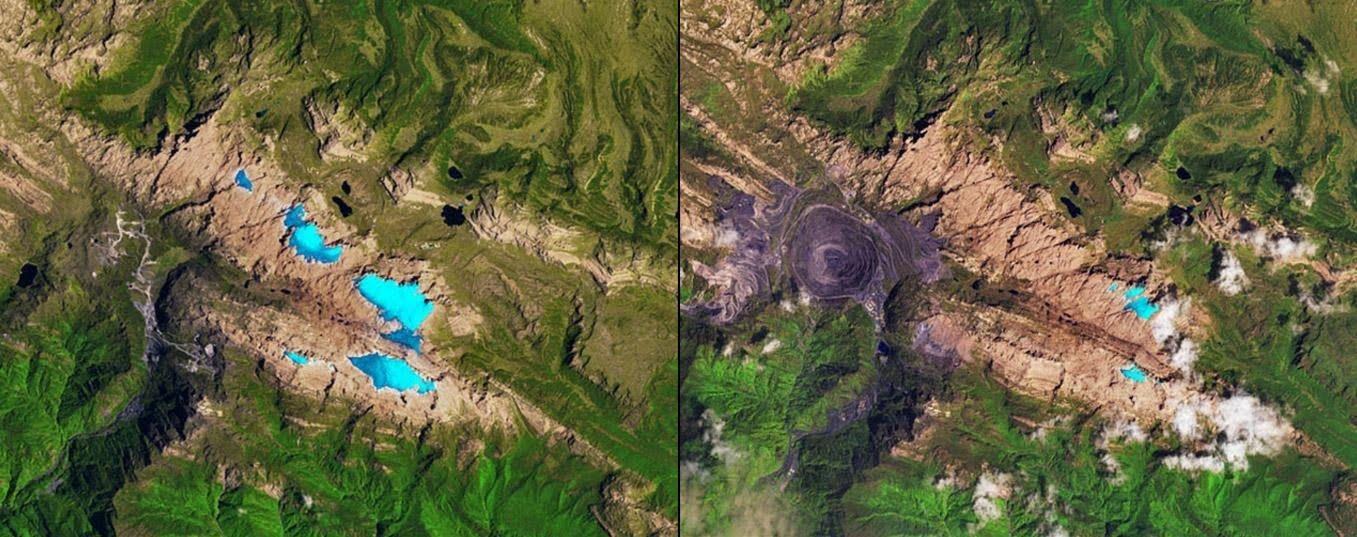
Over recent years, climate risk has shifted from a peripheral sustainability issue to a central business concern. Organisations across industries now conduct scenario analysis, assess climate exposure across multiple time horizons, and disclose physical and transition risks in increasingly structured ways. Heat stress, flooding, drought exposure, regulatory transitions, and market shifts are now commonly recognised within reporting frameworks.
However, greater visibility has not always translated into operational change. Risks are documented, scenarios are modelled, and disclosures continue to improve, yet supply chains, capital allocation strategies, and infrastructure planning often remain largely unchanged.
Assessments by organisations such as the CDP have repeatedly shown that while climate disclosure quality has improved significantly, integration of climate risk into core business strategy and financial decision-making remains uneven. Climate risk is now easier to identify, but not always easier to integrate into action.
What TCFD clarifies and where it stops
TCFD introduced structure into what was previously fragmented climate reporting. The framework connects governance, strategy, risk management, and metrics into a unified system that enables organisations to assess and communicate climate-related risks more consistently.
This standardisation is important because it establishes a common language for climate risk disclosure, improves comparability across organisations and sectors, and encourages systematic rather than selective risk assessment.
However, this is also where the framework’s role becomes limited. TCFD helps organisations identify and communicate risk, but it does not determine how those risks should be prioritised operationally or financially. It does not prescribe how risks should influence investment decisions, how organisations should adapt strategy, or which interventions should be prioritised.
In practice, TCFD explains what the risks are, but not necessarily what decisions should change because of them.
The gap between risk identification and financial consequence

Most climate risks continue to be communicated qualitatively. They are often described as future disruptions, emerging uncertainties, or long-term exposures. While this improves awareness, it is rarely sufficient for decision-making systems that depend on quantification.
Financial systems operate through measurable exposure. Organisations need to understand how much revenue is vulnerable to disruption, how operational costs may evolve under different climate scenarios, and when risks become financially material. Without this translation, climate risk remains informational rather than actionable.
Consider an organisation dependent on agricultural supply chains exposed to increasing climate variability. Rising temperatures and water stress can reduce yield stability, disrupt sourcing, and increase operational costs. These are not abstract environmental concerns—they directly influence financial volatility.
Similarly, organisations operating within carbon-intensive sector may experience increasing costs as carbon pricing mechanisms expand globally. If this exposure is not quantified financially, it rarely influences pricing models, infrastructure investment, or transition planning.
The challenge therefore lies not only in identifying climate risk, but in expressing that risk in financial terms.
Climate risk does not behave like traditional business risk
Climate risk differs fundamentally from many traditional financial risks. It unfolds across longer time horizons, interacts across systems and geographies, and combines uncertainty with increasingly observable trends.
A flood event, for example, does not only affect a single physical asset. It can disrupt logistics networks, labour availability, downstream operations, supply chains, and regional markets simultaneously. Similarly, policy shifts do not simply alter compliance obligations. They can reshape industries, influence market competitiveness, and accelerate structural economic transitions.
This interconnected nature makes climate risk difficult to isolate within conventional risk frameworks. Institutions such as the World Economic Forum consistently identify climate-related risks among the most systemic threats facing the global economy. Despite this, many organisations still evaluate climate risk as a separate reporting category rather than as a broader driver of operational and financial vulnerability, limiting its influence on long-term strategy.
When risk is described but not priced

A recurring limitation within TCFD-aligned reporting is the presence of detailed climate narratives without corresponding financial quantification. Risks are outlined, scenarios are discussed, and potential disruptions are acknowledged, but the direct financial implications often remain undefined.
This creates a significant disconnect. If a risk cannot be quantified financially, it becomes difficult to prioritise operationally, and risks that cannot be prioritised rarely influence strategic decisions.
For example, an organisation may recognise that part of its asset base is exposed to climate-related disruption. However, if the potential financial consequences remain unquantified, that exposure remains informational rather than actionable.
The same challenge applies to transition risk. Without understanding how policy shifts, emissions costs, or changing market conditions influence profitability and margins, investment decisions continue largely unchanged. Risk that is not priced rarely becomes integrated into operational and financial decision-making, which ultimately weakens long-term risk management.
Reporting does not move capital. Decisions do.
Climate disclosures are often developed as standalone reporting outputs. They are compiled periodically, reviewed, and published alongside financial statements. However, they are not always integrated into the operational systems that shape investment decisions and capital allocation.
This creates a structural divide between reporting and strategy. In many organisations, climate reporting exists within one function while financial planning and operational decisions remain disconnected from those insights.
Frameworks being developed through institutions such as the International Sustainability Standards Board (ISSB) are beginning to close this gap by aligning sustainability disclosures more closely with financial reporting systems. Even so, integration remains an evolving process.
Information alone does not change outcomes. Capital allocation shifts only when climate risks are understood, quantified, and embedded directly into financial and operational decision-making systems.
Turning climate signals into financial decisions
For climate risk to influence real-world outcomes, it must be translated into signals that support operational and financial decisions. This requires connecting environmental intelligence with business systems rather than treating climate reporting as an isolated exercise.
In practice, this can lead to measurable strategic shifts:
- Organisations exposed to repeated climate disruptions may diversify sourcing regions or redesign supply chains
- Businesses facing long-term transition risks may accelerate investment into low-carbon technologies
- Companies anticipating changes in consumer demand may adapt product portfolios and infrastructure planning
These decisions are not driven by reporting alone. They emerge when climate risks are interpreted through financial and operational context. The role of reporting is therefore not simply to disclose risk, but to support actionable interpretation.

While risk unfolds over time, reporting often fails to capture this continuity.
Climate risk is dynamic rather than static. It evolves continuously through changing environmental conditions, policy transitions, technological shifts, and market behaviour. Periodic reporting frameworks alone cannot fully capture this ongoing evolution.
Understanding climate exposure requires continuity. Tracking how risks change over time enables organisations to identify emerging patterns, assess whether mitigation measures are effective, and respond before disruptions become materially significant.
Advances in environmental intelligence systems are increasingly making this possible. Platforms supported by organisations such as NASA Earthdata provide continuous environmental monitoring at spatial and temporal scales that were previously difficult to observe. When integrated with operational and financial data, these systems support a more responsive understanding of climate exposure and business risk.
The Darukaa Perspective
At Darukaa, climate risk is treated not as a disclosure exercise, but as scenario-based, asset-level financial intelligence designed to bridge the gap between climate visibility and operational decision-making.
Darukaa translates climate signals into TCFD-aligned, decision-oriented metrics that quantify exposure and support actionable planning. This includes outputs such as site-level climate risk scores, productivity value at risk (%), asset damage value at risk (%), and scenario-based exposure projections across SSP2-4.5, SSP3-7.0, and SSP5-8.5 pathways.
Risk is evaluated across multiple dimensions rather than in isolation. Darukaa supports forward-looking analysis across multiple climate scenarios, hazard types, and future time horizons extending from 2030 to 2090. Heat stress, drought exposure, and pluvial flooding are assessed dynamically to understand not only where risks exist, but how those risks evolve under different future conditions.
The focus remains on translating climate exposure into financial and operational consequence. Instead of describing climate risks qualitatively, Darukaa quantifies how environmental conditions affect assets, productivity, and long-term business performance. This enables organisations to identify high-risk assets, prioritise interventions, and make more informed decisions around infrastructure planning, capital allocation, and resilience strategies.
Darukaa embeds climate intelligence directly into financial and operational workflows, allowing organisations to move beyond static reporting toward continuous, decision-integrated risk management. Insights evolve dynamically over time, enabling organisations to track changing exposure and respond proactively.
Darukaa is designed as a decision-integrated environmental intelligence infrastructure that connects climate scenario analysis with asset-level financial exposure and operational planning. By linking climate signals to measurable financial impact, Darukaa ensures that climate risk is not only visible, but operationally usable. Climate exposure is therefore not only identified, but also priced, prioritised, and translated into action.
When risk stays on paper, nothing changes
Climate reporting is entering a new phase where organisations are increasingly evaluated not only on whether they disclose climate risks, but on whether their decisions reflect those risks meaningfully.
Frameworks influenced by the Task Force on Climate-related Financial Disclosures have successfully brought climate risk into mainstream financial conversations. The next challenge is ensuring those conversations lead to operational and financial change.
It is no longer enough to ask what risks exist. The more important question is what decisions are changing because of them. Risk only becomes meaningful when it influences action, and ultimately, the value of TCFD lies not only in disclosure itself, but in its ability to shape real financial and strategic outcomes.
FAQs
1. What is TCFD reporting?
TCFD reporting is a framework that helps organisations disclose climate-related risks and opportunities across governance, strategy, risk management, and metrics.
2. Why is TCFD important for businesses?
TCFD helps businesses understand how climate risks can affect financial performance, enabling better risk management and improved transparency for investors and stakeholders.
3. What are the four pillars of TCFD?
The four pillars are governance, strategy, risk management, and metrics and targets. Together, they provide a structured approach to assessing and disclosing climate risk.
4. What is the difference between physical risk and transition risk?
Physical risk refers to climate impacts like floods or heatwaves affecting operations, while transition risk comes from policy changes, market shifts, and the move toward low-carbon economies.
5. Why do many companies struggle with TCFD implementation?
Many companies identify climate risks but do not translate them into financial impact, making it difficult to integrate insights into strategy and decision-making.
6. How does TCFD connect climate risk to financial performance?
TCFD encourages organisations to assess how climate risks affect revenue, costs, assets, and long-term business viability, linking environmental factors to financial outcomes.
7. Does TCFD reporting reduce climate risk?
No. TCFD improves visibility of climate risks, but actual risk reduction depends on how organisations act on those insights through strategic decisions.
8. What is scenario analysis in TCFD?
Scenario analysis evaluates how different climate futures, such as policy changes or temperature increases, could impact business performance and risk exposure.
9. How can companies turn TCFD insights into action?
Companies can prioritise material risks, quantify financial exposure, integrate climate risk into capital allocation, and align strategy with long-term climate scenarios.
10. Why is TCFD evolving into broader sustainability standards?
TCFD is being integrated into newer frameworks like ISSB to align climate disclosures with financial reporting, making sustainability risks more relevant to investors.