Sound, Soil, and Survival: How a 68-Hectare Mangrove Restoration Sparked a Biodiversity Comeback in the Sundarbans
Nature heals — when we help it remember how.”
In the watery labyrinth of the Sundarbans, home to tigers, tides, and tales of resilience, a quiet revolution is unfolding.
At Darukaa.Earth, we didn’t just plant trees. We reimagined what restoration could mean for biodiversity, carbon, and community — using data, sound, species sightings, and soil metrics to prove that bringing nature back isn’t just possible. It’s powerful.
This is the story of two landscapes. One was left alone. One brought back to life.
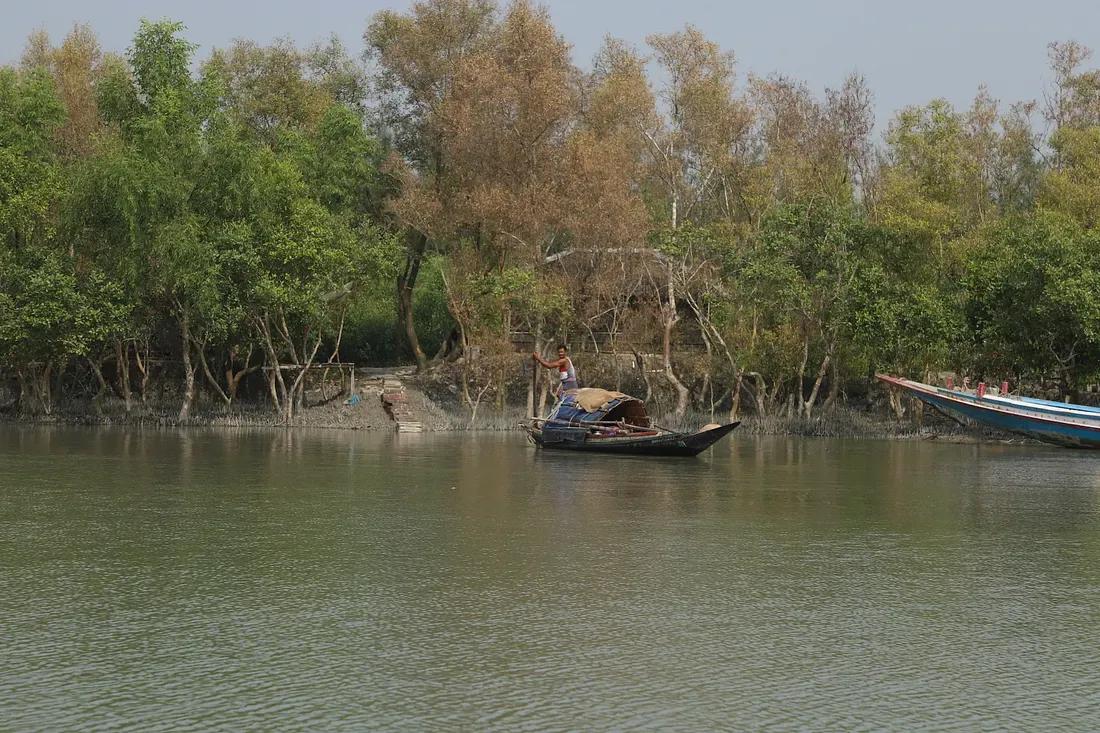
The Living Experiment: Restoration vs. Control
To understand the impact of ecosystem restoration, we set up a comparative case study in the Indian Sundarbans, the world’s largest coastal mangrove system.
Restoration Site — 68 hectares (Tipligheri)
Actively restored with native mangrove species. Monitored using remote sensing, bioacoustic sensors, and camera traps. Community involvement is embedded at every step.
Control Site — 11 hectares (Rangabalia)
Left untouched to represent natural recovery processes in degraded landscapes.
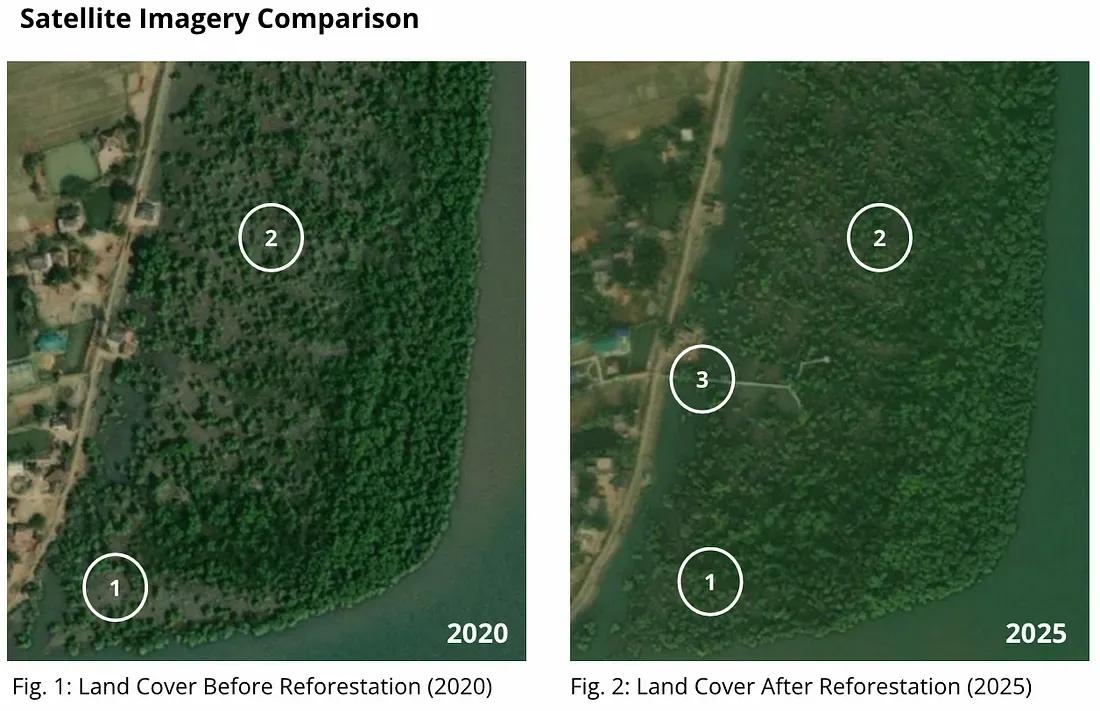
This side-by-side model allowed us to isolate the effects of intervention across multiple ecological and social parameters.
Restoration Brings Biodiversity Back
Our most powerful outcome: biodiversity bounced back fast.
Species richness in the restoration site was 44 percent higher than in the control site. Unique, specialist species that had vanished from degraded areas began to return.
In the restored area, we recorded 30 species compared to just 11 in the control. Key indicators included the Mangrove Whistler, Oriental Scops Owl, and Fishing Cat — species that are sensitive to habitat quality and rarely seen in disturbed zones.
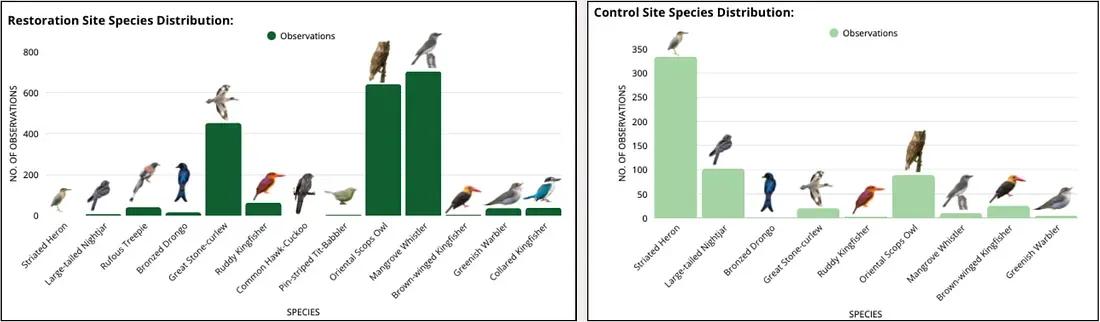
The Shannon Diversity Index, a key measure of ecological balance, was also significantly higher in the restoration site, indicating not just more species, but more even distribution.
Camera traps captured a resurgence in wildlife. Birds, porcupines, wild boars, and small carnivores like the Fishing Cat became regular visitors. In contrast, the control site showed a stark absence of habitat specialists.
Listening to Life: Bioacoustics Prove Ecosystem Recovery
We deployed waterproof, solar-powered acoustic sensors across both sites. These devices listened to the forest day and night, capturing thousands of hours of sound. The result was striking.
In the restored area, the dawn and dusk soundscapes were alive with biological activity. The Normalized Difference Sound Index (NDSI) confirmed strong biological dominance, with minimal anthropogenic noise. At peak periods, the acoustic activity index soared, suggesting healthy, synchronized behavior among insectivores and nocturnal birds.
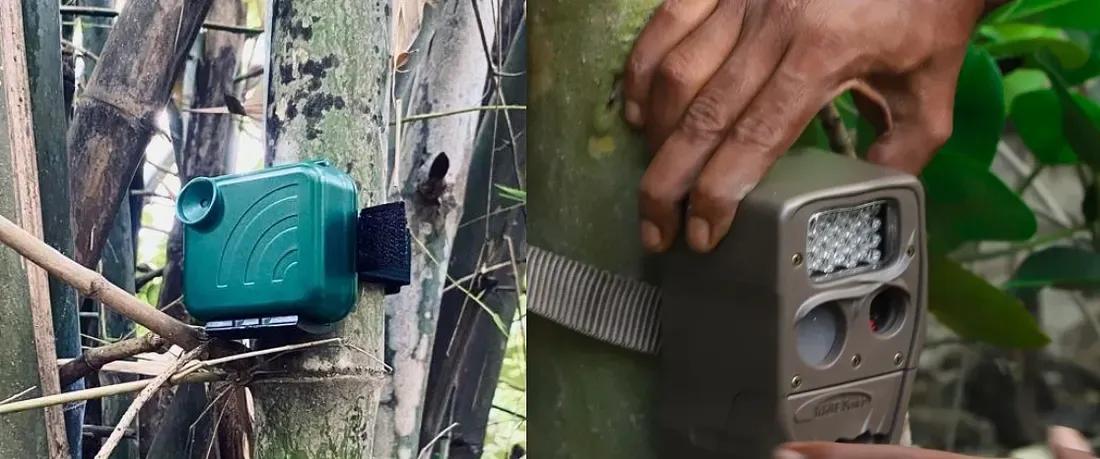
In contrast, the control site experienced a sonic collapse in the afternoon. Anthropogenic disturbances like boat engines and human activity drowned out natural sounds. Even dawn and dusk produced far less activity — indicating ecological silence.
Acoustic data doesn’t just measure sound — it reflects the pulse of life. And in the restored site, that pulse was strong.
Carbon Gains That Count
Mangroves are known for their ability to store vast amounts of carbon. Our restoration site proved this again — but with new, quantifiable data.
- Above-ground biomass (AGB) in the restored site was 6.23 Mg/ha, compared to 1.28 Mg/ha in the control site — indicating greater standing vegetation and photosynthetic potential.
- Soil Organic Carbon (SOC) in the restored site reached 25.24 t/ha at 200 cm depth, compared to a maximum of 9.61 t/ha in control plots.
Normalized Difference Vegetation Index (NDVI) values confirmed this pattern from space. Satellite data revealed a dense, thriving canopy in the restored site and sparse or barren vegetation in the control area.
We are continuing to model carbon sequestration across seasons, but this early-stage biomass and SOC data confirms one thing clearly: restoration enhances both carbon capture and carbon storage, even within a few years of intervention.
Healing the Landscape: Water and Soil Indicators
Restoration didn’t just bring back trees — it brought back the systems that sustain life.
Water-holding capacity in the soil improved dramatically. At the critical 30–60 cm root depth, restored plots could hold 148 cubic meters per hectare. This retained moisture supports root health and ecosystem resilience, especially during dry spells.
Surface water mapping showed alarming losses in the control site. Seasonal water had vanished from more than 25 hectares. Restoration mitigated these effects by improving soil texture, increasing organic matter, and stabilizing erosion-prone zones.
Even below the surface, restoration made a difference. Soil texture analysis revealed that subsoils in control sites had become too sandy, threatening root stability and nutrient availability. In restored plots, sand-clay ratios were more balanced, allowing for deeper, healthier root systems.
From Barren to Balanced: The Soundscape of Restoration
At the restoration site, acoustic evenness and complexity reflected a more mature, stable ecosystem.
Dawn brought a structured crescendo of calls — from the Oriental Scops Owl to the Mangrove Whistler. Midday noise intrusions were minimal. Even nocturnal activity was vibrant, thanks to undisturbed sleeping zones and healthy insect populations.
The control site, however, told a different story. Activity was erratic. The afternoon collapse in sound — what we call “acoustic fragmentation” — matched the absence of wildlife seen in camera traps.
A healthy ecosystem doesn’t just look different. It sounds different. And when you listen closely, the difference is profound.
People at the Heart of the Ecosystem
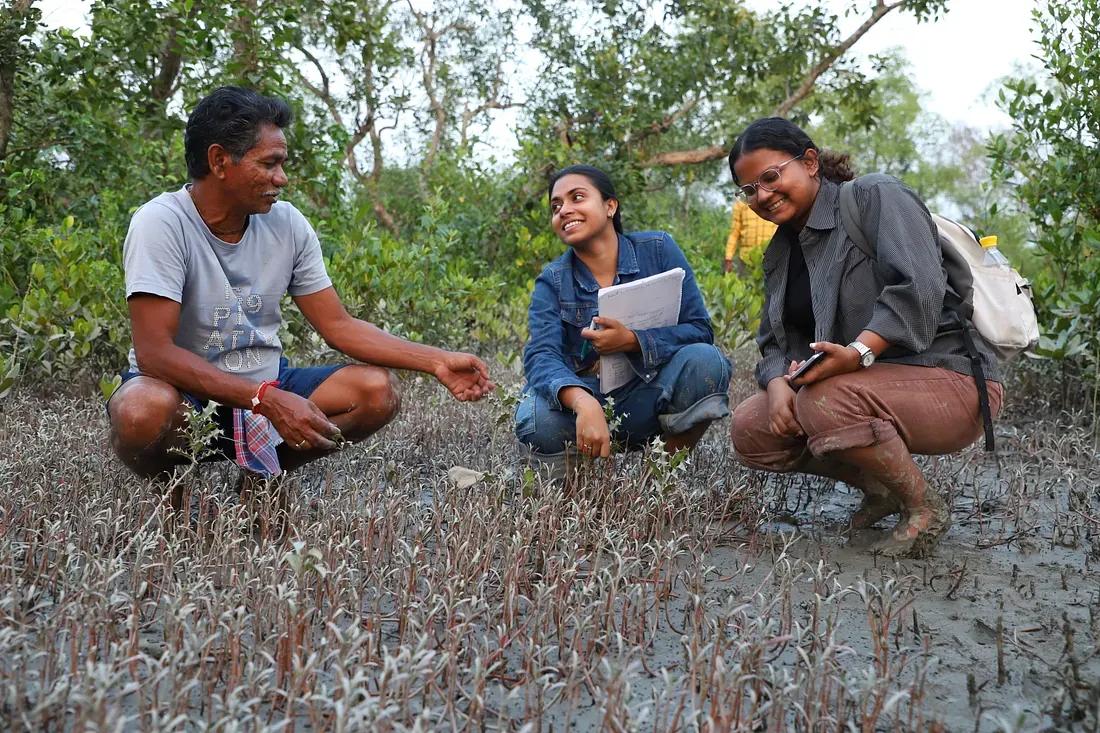
No restoration is complete without community. Our project didn’t just grow forests — it grew livelihoods, leadership, and hope.
Over 320 green jobs were created across restoration, monitoring, and nature-based livelihoods. Women-led 45 percent of restoration activities. Locals were trained in biodiversity data collection, eco-tourism practices, and mangrove stewardship.
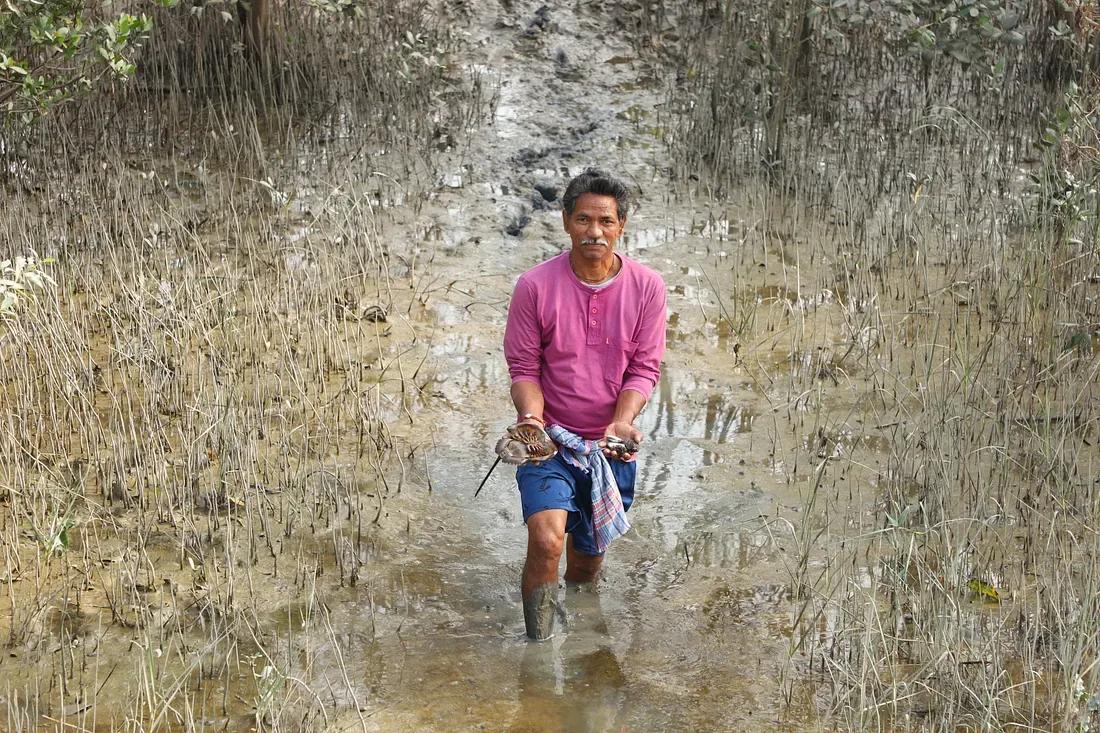
By linking these efforts to future biodiversity credits and carbon markets, we’re building an economy rooted in restoration.
The project directly supports seven UN Sustainable Development Goals, from poverty reduction to gender equality and climate resilience.
What We Learned from the Control Site
The control site wasn’t a failure — it was a warning.
Without intervention, biodiversity would collapse. Generalist species like the Striated Heron thrived, while specialists vanished. The soil degraded. Soundscapes were silent. And the water bodies slowly disappeared.
It proved one thing: doing nothing is still a choice. And often, it leads to ecological breakdowns.
What’s Next: Scaling Restoration, Globally
Science is clear. Restoration works.
Now we’re scaling this model to:
- Restore 500+ hectares across vulnerable delta regions
- Enhance biomass and soil carbon stocks through regenerative planting
- Create 500 new jobs in monitoring, planting, and eco-tourism
- Launch a biodiversity credit marketplace rooted in verified, measurable impact
We’re not just planting trees. We’re building a blueprint for how data, community, and ecology can come together to regenerate our planet.
A Global Model of NatureTech in Action
This is more than a project. It’s proof that technology when placed in the hands of those who live closest to the land, can drive ecological transformation.
The Sundarbans taught us that we don’t have to choose between biodiversity and carbon, between nature and people, or between conservation and livelihoods.
We can choose all of them — together.
Ready to Restore More?
If you’re a policy leader, climate investor, restoration NGO, or eco-resort looking to embed biodiversity into your operations, we’re ready to work with you.
Let’s scale this success. Let’s make restoration measurable. Let’s make it happen.
“We didn’t just count species. We listened to forests, touched the soil, followed water, and built trust. In doing so, we rediscovered something deeper — our relationship with the living world.”