From Data to Decision-Ready Environmental Reports

Why reporting is the real bridge between science and action
Environmental work today generates more data than ever before. Satellites continuously observe landscapes, sensors track air, water, and climate signals in real time, and field teams collect ecological data across seasons. Despite this growing volume of information, many environmental decisions still rely on summaries that feel disconnected from actual conditions.
The challenge is not the availability of data — it is how that data is communicated.
Reporting is the point where raw observations are translated into understanding. It determines whether complexity is clarified or lost. Decision-ready environmental reporting is not about presenting everything that has been measured, but about structuring information so that decision-makers can interpret signals and act with confidence.

What reporting actually means in an environmental context
Reporting is often treated as documentation — tables, charts, and annexures compiled at the end of a project. In practice, however, reporting is a design function. It shapes how environmental information is interpreted and whether it contributes meaningfully to decision-making.
In a typical environmental impact assessment, air quality may be presented as averages, water quality as compliance thresholds, and biodiversity as a species checklist. While each element may be technically correct, the overall narrative often fails to answer a critical question: where is risk increasing, and what decisions need to change in response?
Environmental systems are dynamic and interconnected, and reporting must reflect this complexity without overwhelming the reader. When analysis is presented as static snapshots, it can obscure emerging risks rather than highlight them.
This perspective aligns with environmental assessment approaches developed by the United Nations Environment Programme, where reporting is positioned as a decision-support function rather than a compliance output.
In practice, effective reporting should:
- Identify signals indicating environmental stress
- Highlight where trends diverge from expectations
- Clarify which uncertainties influence decisions
Good reporting does not simply follow analysis — it shapes how analysis is structured from the beginning.
Why does more data not automatically lead to better decisions
Environmental teams today work with diverse datasets, including remote sensing, field surveys, sensor networks, and historical records. The challenge lies not in measurement but in integration.
In many organisations, data is structured around internal teams rather than ecological systems. Climate, biodiversity, and operations datasets are often analysed separately, even though environmental processes are interconnected.
When these datasets are reported independently, decision-makers receive fragmented signals. One dataset may indicate stability, another decline, and a third future risk. Without integration, interpretation becomes difficult, especially under time constraints.
This is where environmental risk often remains hidden.
Research on governance and institutional trust, including insights from OECD’s work on policy coherence, shows that fragmented reporting reduces decision quality even when high-quality data exists. The issue is not missing information, but lack of clarity.
Decision-ready reporting addresses this by integrating datasets around environmental questions, showing how different variables interact and influence outcomes.

From raw data to environmental signals
Decision-ready reporting recognises that not all data carries equal importance. Some measurements act as signals, others provide supporting context, and some help quantify uncertainty.
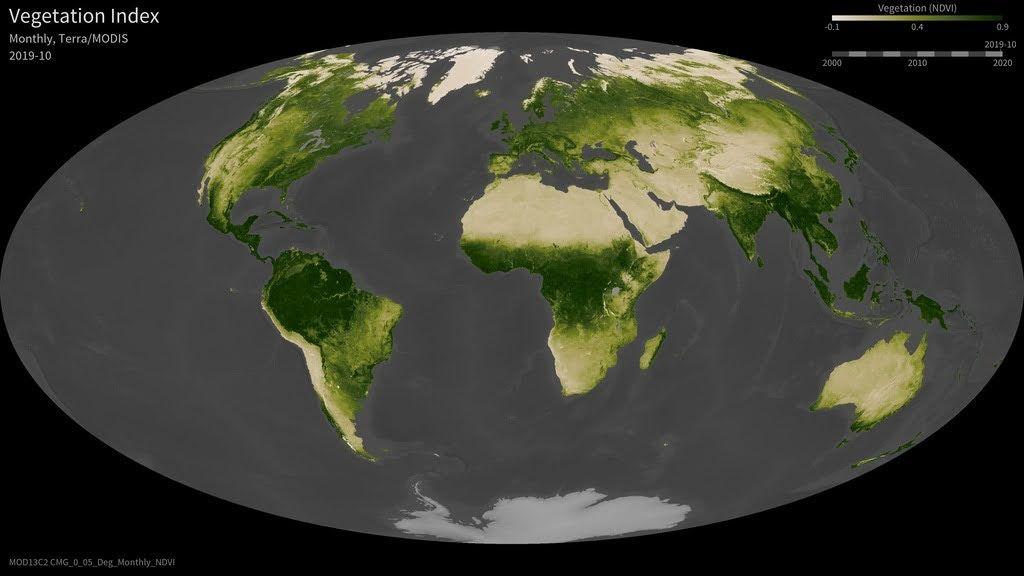
For example, changes in vegetation productivity observed through satellite imagery from NASA Earthdata may indicate emerging ecosystem stress. On their own, these trends may appear as seasonal variation. However, when combined with biodiversity observations and soil or moisture data, a clearer pattern emerges — climate variability is affecting ecosystem resilience.
In managed landscapes such as agriculture or forestry, productivity may appear stable in the short term while underlying ecological conditions degrade. Reporting that highlights early signals allows for timely intervention before impacts become significant.
This shift — from reporting metrics to interpreting signals — is fundamental to effective environmental reporting.
Example: Turning environmental data into a decision signal
Consider a renewable energy project located across semi-arid landscapes. Satellite vegetation indices indicated stable vegetation cover across the broader region, based on datasets similar to those available through NASA Earthdata. At the same time, biodiversity field surveys conducted at project sites showed a decline in pollinator presence, while regional climate projections pointed toward increasing drought intensity over the next decade, consistent with patterns highlighted in the IPCC assessments.
Individually, these observations appeared manageable. However, when brought together within a single reporting framework, a clearer pattern emerged. Repeated climate stress events were gradually reducing ecosystem resilience, even though vegetation cover continued to appear stable at a broader satellite scale. Similar ecological warning signals have also been identified in global biodiversity assessments by IPBES.
This integrated understanding led project planners to revise land management practices in sensitive areas and introduce habitat buffers to support pollinator recovery. The data itself had not changed; what changed was how environmental signals were interpreted and prioritised within reporting.
Reporting is where uncertainty must be handled honestly
All environmental data involves uncertainty due to measurement limitations, sampling gaps, and natural variability. The effectiveness of reporting depends on how this uncertainty is communicated.
Reporting that ignores uncertainty can create false confidence, while overemphasising it can delay decisions. Decision-ready reporting presents uncertainty in a balanced manner, providing context through trends, ranges, and confidence levels.
This approach is consistent with climate disclosure frameworks such as the Task Force on Climate-related Financial Disclosures, where transparency is prioritised over perceived precision.
Why reporting must be temporal, not static
Environmental change occurs over time, yet reporting often represents it as a single snapshot. This limits the ability of decision-makers to understand trends and direction.
Time-series reporting provides critical insight into how systems are evolving. It helps answer key questions:
- Is the system improving, stabilising, or degrading?
- Are mitigation strategies effective?
- Are risks increasing or decreasing over time?
With advances in long-term monitoring and remote sensing, it is now possible to incorporate temporal analysis into reporting. This ensures that decisions are based on trends rather than isolated observations.
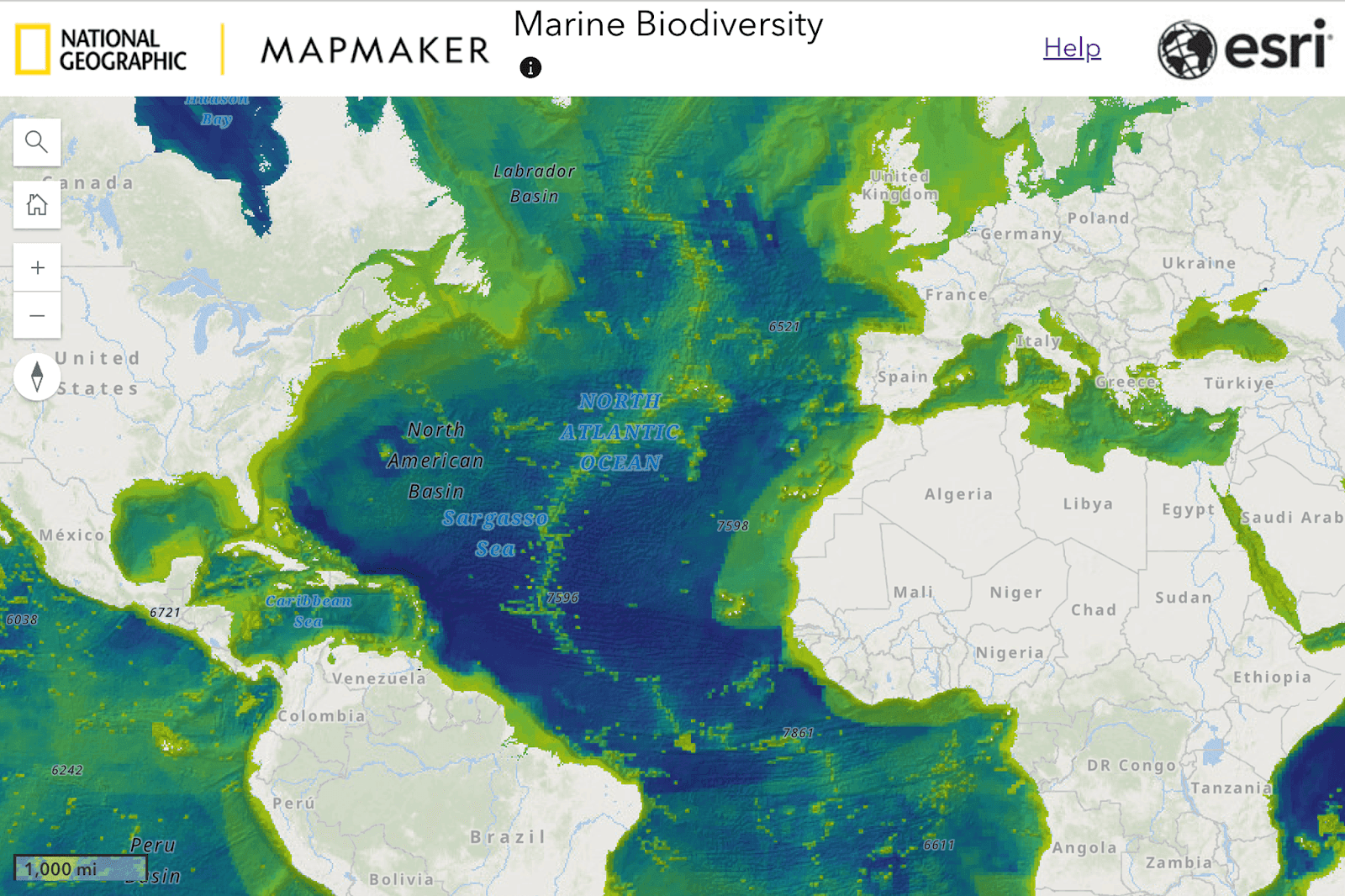
Integrating climate, biodiversity, and land use in reporting
Environmental decisions affect multiple systems simultaneously. Changes in land use influence carbon storage, biodiversity, water availability, and human exposure. Reporting that treats these factors independently can overlook important trade-offs.
Integrated reporting addresses this by presenting environmental interactions holistically. For instance, a land-use intervention may reduce emissions while negatively affecting habitat connectivity or water systems. Without integration, such trade-offs may only become visible after implementation.
This systems-based approach aligns with frameworks developed by the Food and Agriculture Organisation of the United Nations, where reporting supports cross-sector environmental decision-making.
What makes a report decision ready
A decision-ready environmental report focuses on relevance rather than volume. It prioritises clarity over completeness and structures information around decision needs.
Such reports typically:
- Clarify what is changing
- Explain why the change is occurring
- Highlight areas of increasing risk
- Identify where interventions are effective
- Communicate uncertainty clearly
The emphasis is not on presenting all available data, but on ensuring that the right insights are accessible to decision-makers.
How decision-ready environmental reporting works
In practice, decision-ready reporting follows a structured workflow:
- Data integration
- Signal prioritisation
- Risk framing
- Decision structuring
Environmental data from multiple sources is first integrated into a unified analytical framework. Key signals are then prioritised based on ecological relevance and risk exposure. These signals are translated into insights that directly inform operational and strategic decisions.
This approach reflects methodologies discussed in UNEP environmental assessment frameworks and governance research from the OECD.
The Darukaa Approach to Reporting
At Darukaa, reporting is designed as a decision architecture rather than a documentation step.
Instead of compiling results after analysis, data integration occurs at the beginning. Field observations, remote sensing data, and climate projections are combined into a unified analytical layer, enabling patterns to be interpreted across both space and time.
Reporting then focuses on identifying decision-relevant signals rather than presenting raw metrics. Trends, thresholds, and emerging risks are prioritised to provide clarity on both current conditions and future implications.
This approach aligns with integrated disclosure frameworks such as TCFD and land-climate systems thinking promoted by the FAO. As new data becomes available, reporting evolves accordingly, maintaining continuity between past observations and future decisions.
Why this matters now
As environmental accountability increases, decisions are being made under tighter timelines and greater scrutiny. Ineffective reporting can delay action, create risk, or reduce stakeholder trust.
There is increasing evidence that improved reporting directly influences strategy.
Organisations such as Unilever have demonstrated how integrated environmental reporting can reveal converging risks across supply chains, leading to strategic shifts such as regenerative practices and region-specific risk management, as outlined in its Climate Transition Action Plan.
Similarly, Ørsted’s transition toward renewable energy was supported by long-term integrated reporting that linked financial exposure with environmental and climate trends, as detailed in its sustainability and annual reporting.
In both cases, reporting did not simply justify decisions — it shaped them.

When environmental signals are integrated and interpreted early, decisions can adapt before impacts escalate. Investments shift, land-use strategies evolve, and operational practices improve.
At Darukaa, reporting is treated as the interface between environmental intelligence and decision-making. Because while data provides information, it is structured insight that drives action.
FAQs
1. What are decision-ready environmental reports?
Decision-ready environmental reports translate complex environmental data into clear signals that support real-world decisions. They focus on relevance, context, and implications rather than exhaustive data presentation.
2. How is decision-ready reporting different from traditional environmental reporting?
Traditional reporting often documents compliance and measurements. Decision-ready reporting is designed around decisions — highlighting trends, risks, uncertainties, and trade-offs that directly inform action.
3. Why doesn’t more environmental data always lead to better decisions?
Because data is often siloed, static, or presented without context. Without integration across climate, biodiversity, and land use, decision makers struggle to interpret what the data actually means.
4. How does decision-ready reporting handle uncertainty?
It presents uncertainty transparently and proportionately — using ranges, confidence levels, and trends — so uncertainty informs decisions rather than creating false confidence or paralysis.
5. Why is time-series reporting important in environmental decisions?
Environmental change happens over time. Time-series reporting shows direction and trajectory, helping decision makers understand whether systems are improving, degrading, or responding to interventions.
6. Can decision-ready reporting influence business or policy strategy?
Yes. Many organisations have shifted sourcing, land-use, and climate strategies after integrated reporting revealed converging environmental risks that were not visible through siloed data.
7. Who should use decision-ready environmental reports?
Decision-ready reporting is designed for non-technical decision makers — including business leaders, policymakers, investors, and planners — while still maintaining scientific integrity.
8. Is decision-ready reporting only relevant for compliance-driven projects?
No. While it supports compliance, its real value lies in strategic planning, risk management, and long-term environmental and business decision-making.