Preventing Greenwashing in Carbon Credits Through Strong MRV Systems

Why Measurement, Reporting, and Verification determine credibility
Carbon markets operate on credibility and trust.
When a carbon credit is issued, it represents a quantified environmental claim—that a measurable amount of carbon dioxide has been reduced, avoided, or removed from the atmosphere. Unlike physical commodities, however, carbon credits cannot be directly observed. Their legitimacy depends entirely on the systems used to measure, report, and verify those claims.
This is where the risk of greenwashing emerges.
If carbon accounting systems are weak, opaque, or inconsistent, credits can overstate climate impact. Inflated baselines, exaggerated reductions, or incomplete monitoring can undermine confidence in the market itself. Recent scrutiny surrounding voluntary carbon markets has demonstrated how quickly trust can weaken when methodologies or verification systems are questioned, including investigations highlighted by The Guardian and multiple research institutions examining carbon credit quality.
The issue is not the concept of carbon markets. It is the integrity of the MRV systems supporting them.
What MRV actually means in carbon markets
MRV stands for Measurement, Reporting, and Verification. It is the backbone of every credible carbon credit.
- Measurement determines how emissions reductions or removals are quantified.
- Reporting translates those measurements into transparent documentation.
- Verification involves an independent third-party review to confirm that claims are accurate and consistent with the methodology.
The importance of MRV is formally embedded in global climate governance frameworks such as the Paris Agreement transparency framework, which recognises that climate action only functions when claims can be tracked and trusted.
In voluntary carbon markets, standards bodies such as Verra and Gold Standard require detailed methodologies and verification procedures precisely to prevent inflated or unverifiable claims.
Strong MRV systems are not administrative overhead. They are what make a carbon credit real.
Where greenwashing risk actually emerges
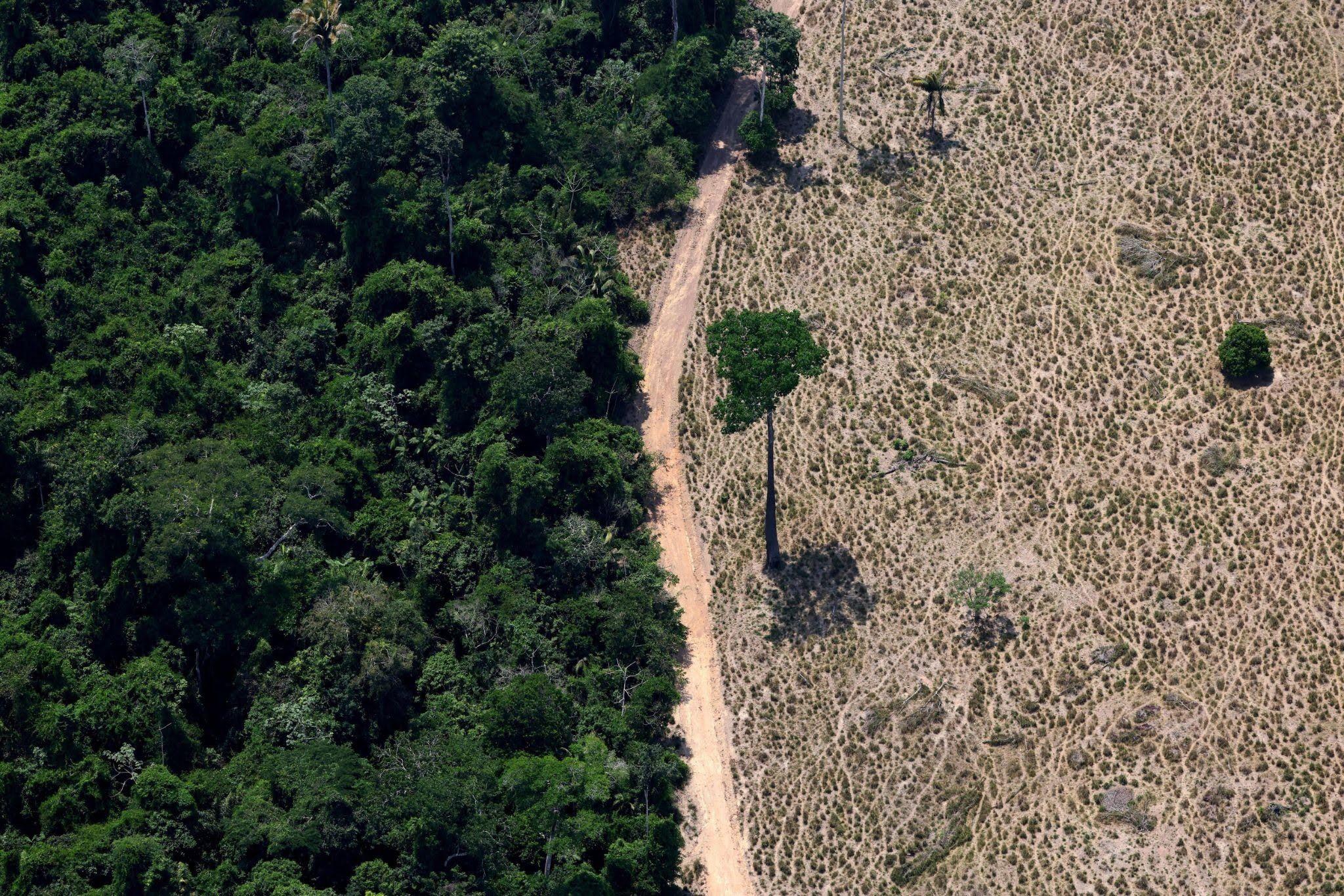
Greenwashing in carbon markets rarely appears dramatic; it often emerges in technical details.
It can begin with baseline design. If a project assumes deforestation or degradation would have been higher than realistically expected, calculated “avoided emissions” may be overstated. Academic analyses of forest-based credits have repeatedly shown how sensitive outcomes are to baseline assumptions, including research published in journals such as Nature Climate Change.
Additionality presents another challenge. A project must demonstrate that carbon reductions would not have occurred without carbon finance. If projects that were already financially viable issue credits, the climate benefit becomes questionable. This issue has been widely discussed in assessments of carbon market integrity by organisations such as the World Bank.
Leakage is another risk. Protecting one forest area may shift deforestation elsewhere. Without landscape-level monitoring, reported reductions may not reflect net climate benefit.
These risks are not theoretical; they are structural and arise when MRV systems are designed to meet minimum requirements rather than integrity thresholds.
Measurement: the foundation of credibility

Measurement defines the starting point of integrity, and weak measurement cannot be repaired through reporting language.
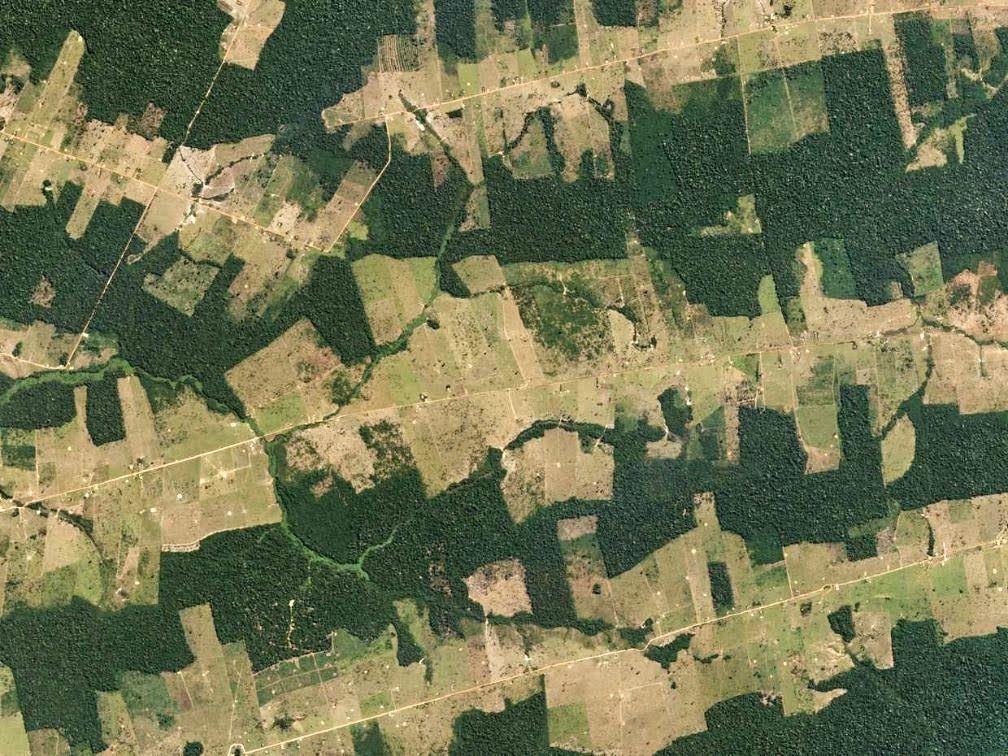
Traditional MRV relied heavily on field sampling and periodic surveys. While scientifically robust, such approaches can be limited in scale and frequency. Today, remote sensing, satellite-based biomass estimation, LiDAR, and machine learning models have dramatically improved the ability to track land-use change and carbon stock variation at higher spatial and temporal resolution.
Agencies such as NASA Earth Observatory and research institutions worldwide have advanced methods to monitor vegetation change, canopy cover, and carbon flux continuously. Integrating such tools into MRV reduces the risk of underreporting degradation or overstating permanence.
At the same time, technology alone does not prevent greenwashing.
Measurement systems must remain transparent, reproducible, and methodologically aligned with approved standards. Strong MRV begins not only with better tools, but with methodological discipline.
Reporting: where transparency either holds or collapses
If measurement defines numbers, reporting defines meaning.
Carbon project documentation can span hundreds of pages. Baseline models, sampling design, emission factors, leakage assessments, buffer contributions — all technically present. Yet the real test of reporting is not volume, but clarity.
Weak reporting obscures assumptions, while strong reporting makes them visible.
For example, if baseline deforestation estimates are derived from historical trends, reporting should explain:
- Why a particular historical period was selected
- How regional variability was incorporated
- How uncertainty was quantified and addressed
Similarly, when permanence risks are managed through buffer pools or reversal safeguards, reporting must clearly communicate how those risks are estimated, monitored, and updated over time.
The Integrity Council for the Voluntary Carbon Market (ICVCM) has emphasised that transparency in methodologies and disclosure is central to restoring and maintaining confidence in voluntary markets. Without accessible reporting, even technically sound projects struggle to defend credibility.
Reporting is where carbon credits become understandable beyond technical specialists. It determines whether buyers, regulators, and communities can assess risk intelligently.
Verification: independence and evolving scrutiny
Verification introduces independence into the system. Accredited third-party auditors review project documentation, sampling methods, calculations, and compliance with methodology requirements.
This layer is essential. Without independent verification, carbon markets would rely on self-declaration.
Standards such as Verra’s Verified Carbon Standard and Gold Standard require periodic validation and verification by accredited bodies. These processes are designed to detect inconsistencies, methodological errors, and non-compliance.
However, scrutiny of voluntary carbon markets in recent years has demonstrated that verification alone is not sufficient if methodologies themselves are weak or if data transparency is limited. Investigations and academic assessments questioning certain forest credit baselines have reinforced a critical lesson: MRV must evolve continuously to match scientific advances and risk complexity.
Verification is not a static safeguard. It must adapt as expectations rise.
Digital MRV and the shift toward continuous accountability

One of the most important shifts in carbon markets today is the move toward digital MRV.
Remote sensing platforms, automated land-use change detection, satellite-based biomass estimation, and open-access geospatial monitoring have significantly reduced the time lag between environmental change and reporting. Institutions such as NASA Earthdata and global forest monitoring platforms like Global Forest Watch have demonstrated how near-real-time monitoring can detect deforestation events quickly and transparently.
This changes the integrity equation.
When monitoring occurs annually or intermittently, degradation can remain undetected for long periods. Digital MRV enables more continuous oversight, improving confidence in permanence claims and leakage detection.
At the same time, digital systems must be integrated responsibly. Data pipelines, methodological alignment, uncertainty quantification, and validation protocols must remain rigorous. Technology enhances MRV—but only when embedded within strong methodological governance.
How buyers are reassessing carbon credit integrity
Corporate buyers are no longer evaluating carbon credits solely on price or volume. Integrity is becoming central to procurement decisions.
Frameworks such as the Science Based Targets initiative (SBTi) emphasise that carbon credits should complement, not replace, direct emissions reductions. Increasingly, buyers are asking deeper questions:
- How was additionality demonstrated?
- What safeguards address permanence risk?
- How is leakage monitored?
- Is monitoring continuous or periodic?
- Are methodologies publicly accessible and transparent?
The growing attention to integrity is not a sign of market failure, but of market maturation. Strong MRV systems become competitive advantages for project developers who can demonstrate credibility under scrutiny.
Greenwashing risk declines when transparency increases.
What strong MRV systems actually require
Preventing greenwashing is not about defensive communication. It is about structural design.
- Strong MRV systems require:
- Scientifically grounded baselines
- Transparent additionality demonstration
- Integrated landscape-level monitoring
- Clear uncertainty quantification
- Independent and periodic verification
- Publicly accessible documentation
- Continuous improvement as science advances
They also require alignment across measurement, reporting, and verification from the start. When these elements are treated sequentially rather than systemically, gaps emerge.
Integrity must be engineered rather than simply declared.
The Darukaa Perspective
At Darukaa, MRV is not treated as a compliance checkpoint. It is built as an integrated environmental intelligence infrastructure.
The platform is designed as a three-layer system that brings together carbon, climate, and biodiversity into a unified decision framework.
Carbon intelligence includes emissions measurement across Scope 1, 2, and 3, supported by MRV-ready data structures aligned with established protocols. Climate intelligence incorporates forward-looking risk modelling, including heat stress, drought exposure, and pluvial flooding, across multiple time horizons. Biodiversity intelligence captures ecosystem health through indicators such as species richness, vegetation indices, habitat condition, and landscape fragmentation.
These layers are not analysed in isolation but are integrated into a unified system.
Darukaa combines multiple data streams into a single MRV-ready architecture. This includes GHG Protocol-aligned emissions inputs, satellite-based remote sensing for land-use and vegetation monitoring, field and acoustic data for species detection and ecological activity, and geospatial intelligence for mapping site-level conditions and exposure.
The result is not aggregated reporting, but spatially explicit intelligence at the level where decisions are made.
Every output is tied to a specific site or asset, enabling organisations to compare performance across locations, identify variability within portfolios, and understand environmental conditions with precision. Insights are delivered through interactive geospatial dashboards that make complex environmental data operationally usable.
Equally important is the temporal dimension.
Darukaa enables continuous monitoring aligned with digital MRV principles, allowing users to track changes in emissions, ecosystem condition, and biodiversity activity over time. Climate risks are not assessed as static snapshots, but through scenario-based projections across pathways and time horizons extending from near-term planning to long-term exposure.
This transforms how environmental data is used.
Instead of treating emissions, climate, and biodiversity as separate reporting categories, Darukaa connects them to real-world implications. Changes in ecosystem condition, emissions patterns, or climate exposure are translated into operational and financial risk signals. This enables organisations to identify hotspots, prioritise interventions, allocate capital effectively, and align sustainability strategy with measurable impact.
Darukaa goes beyond a reporting tool by functioning as decision-support infrastructure.
It functions as decision-support infrastructure that bridges the gap between compliance frameworks and real-world execution. By integrating carbon accounting, climate risk modelling, and biodiversity intelligence into a unified system, it enables organisations to move beyond static disclosures toward continuous, data-driven environmental decision-making.
MRV is not the endpoint, but the foundation for intelligence that drives action.
FAQs
1. What is MRV in carbon markets?
MRV stands for Measurement, Reporting, and Verification. It is the structured system used to quantify emissions reductions or removals, document them transparently, and confirm their accuracy through independent review.
2. How do strong MRV systems prevent greenwashing in carbon credits?
Strong MRV systems prevent greenwashing by ensuring accurate baselines, transparent reporting, independent verification, and continuous monitoring. When measurement and documentation are rigorous, inflated or unverifiable claims are significantly reduced.
3. Why is measurement critical in carbon credit integrity?
Measurement determines how carbon reductions are calculated. If baselines, emission factors, or sampling methods are weak, reported climate benefits may be overstated. Accurate measurement forms the foundation of credible carbon credits.
4. What role does reporting play in preventing carbon credit fraud?
Reporting translates technical calculations into transparent documentation. Clear reporting explains assumptions, methodologies, uncertainty ranges, and risk mitigation strategies, allowing buyers and regulators to assess credibility.
5. What is additionality in carbon markets?
Additionality refers to whether a carbon project would have happened without carbon finance. If a project was already financially viable, issuing credits may not represent real climate impact. Strong MRV systems require clear demonstration of additionality.
6. How does verification strengthen carbon credit credibility?
Verification involves independent third-party auditors reviewing project data and methodologies. This external validation ensures that carbon credits meet established standards and reduces the risk of misreporting or inflated claims.
7. What is digital MRV and why is it important?
Digital MRV uses satellite monitoring, remote sensing, and automated data systems to track carbon projects in near real time. It improves transparency, reduces time lags, and enhances detection of deforestation, degradation, or reversal risks.
8. How do buyers evaluate the integrity of carbon credits?
Buyers assess integrity by reviewing methodologies, additionality demonstration, permanence safeguards, leakage controls, transparency of documentation, and frequency of monitoring and verification.
9. Can carbon credits still be trusted despite greenwashing concerns?
Yes, but trust depends on the strength of MRV systems. Projects with transparent methodologies, rigorous measurement, independent verification, and continuous monitoring are significantly more credible.
10. Why are MRV systems becoming more important in voluntary carbon markets?
As scrutiny of voluntary carbon markets increases, regulators and corporate buyers demand higher transparency and accountability. Strong MRV systems are essential for maintaining market confidence and long-term credibility.