Biodiversity Monitoring Explained: Methods, Metrics, and Technology
Why Biodiversity Monitoring Matters
Biodiversity supports the systems that make ecosystems stable and productive. It influences soil health, water cycles, pollination, climate regulation, and habitat resilience. These functions are not only ecological concerns but they directly affect agriculture, infrastructure, supply chains, and long-term economic performance.
Yet biodiversity loss is accelerating across the world. Land-use change, climate stress, pollution, and resource extraction are weakening ecosystems at a pace that traditional monitoring systems often struggle to capture. According to the Intergovernmental Science-Policy Platform on Biodiversity and Ecosystem Services, ecosystem degradation is already affecting environmental stability and economic resilience.
This has made biodiversity monitoring essential for governments, businesses, investors, and conservation organisations. It helps assess ecosystem health, track change, validate restoration outcomes, and support nature-related reporting. Without reliable monitoring, biodiversity impact remains an assumption. With monitoring, it becomes measurable evidence.
What Biodiversity Monitoring Means
Biodiversity monitoring is the systematic process of collecting, analysing, and interpreting information about species, habitats, and ecosystem conditions over time. Its purpose is not only to document ecological conditions, but also to understand how ecosystems function and respond to natural processes, human activities, and environmental change.
A one-time ecological assessment provides a snapshot of ecosystem conditions at a specific moment. Continuous biodiversity monitoring extends beyond this by tracking how biodiversity changes across seasons, years, restoration interventions, and environmental stressors. This long-term perspective helps distinguish temporary fluctuations from sustained ecological trends.
At its core, biodiversity monitoring seeks to answer three fundamental questions:
- What species, habitats, and ecosystem conditions are present?
- How are they changing over time?
- What factors are driving those changes?
These insights support conservation planning, restoration assessment, environmental risk management, and nature-related reporting by providing evidence that is both measurable and scientifically robust.
Methods Used in Biodiversity Monitoring

No single monitoring method can fully capture the complexity of biodiversity. Different ecosystems, species groups, and environmental conditions require different approaches, making integrated monitoring systems significantly more effective than relying on any one technique.
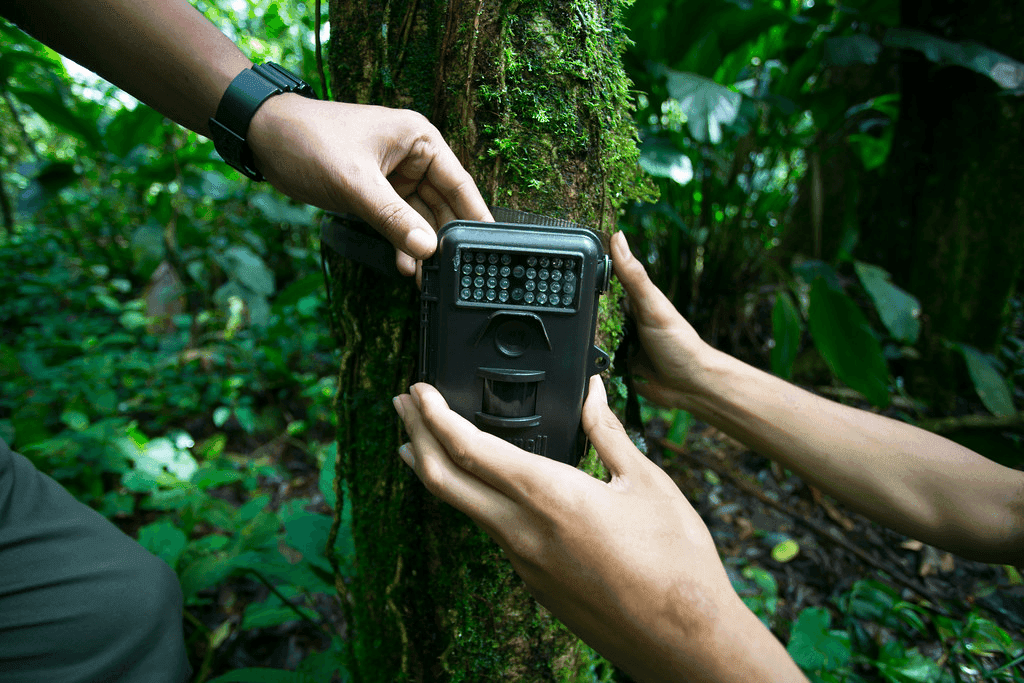
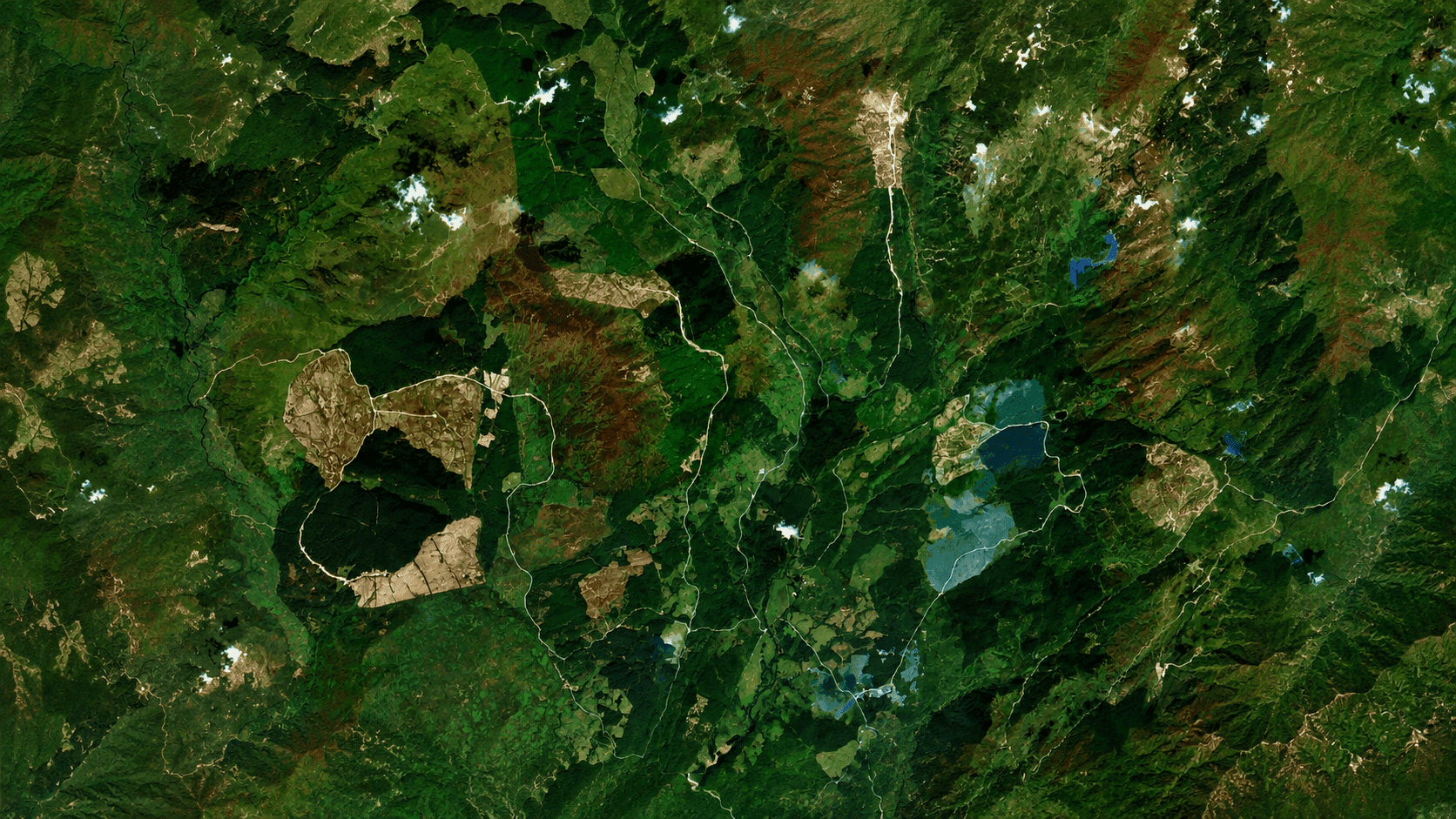
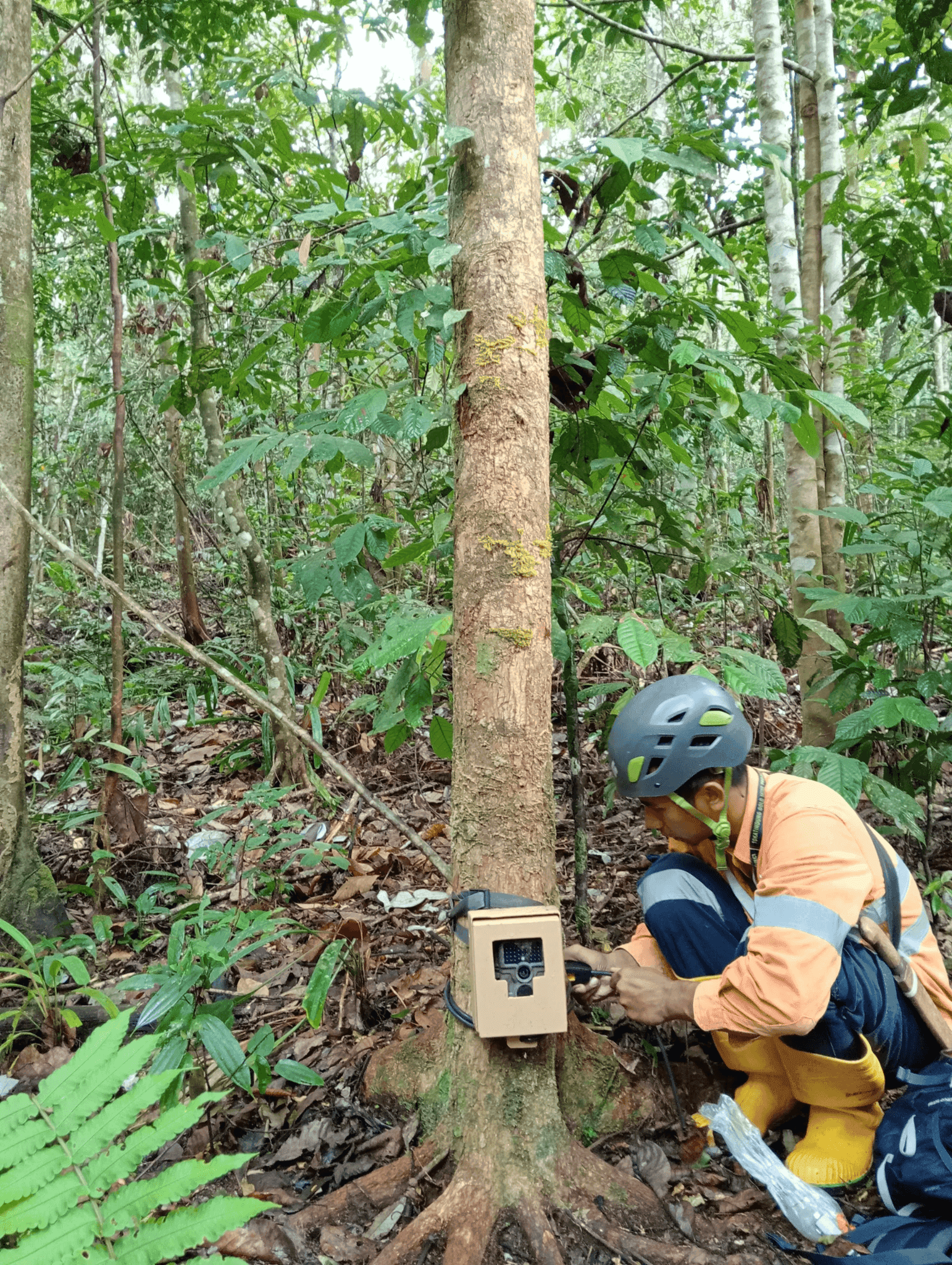
Field surveys remain the foundation of ecological assessment by providing direct observations, habitat evaluations, and species inventories. Camera traps capture visual evidence of wildlife, particularly for elusive or nocturnal species. Bioacoustic monitoring records ecosystem soundscapes continuously, helping detect species activity that may be difficult to observe directly. Environmental DNA (eDNA) identifies species through genetic material found in soil or water, while remote sensing analyses vegetation, habitat condition, and landscape-scale environmental change using satellite imagery.
Each method contributes a different layer of ecological evidence:
- Camera traps document species presence and movement.
- Bioacoustics captures continuous patterns of species activity.
- eDNA detects species that are difficult to observe visually.
- Remote sensing provides landscape-scale ecosystem analysis.
- Field surveys validate observations and provide ecological interpretation.
Together, these complementary approaches create a more comprehensive and reliable understanding of biodiversity than any single method alone.
Challenges in Measuring Biodiversity
Measuring biodiversity is complex because biodiversity is not a single metric. Unlike carbon, which can be expressed in tonnes of CO₂ equivalent, biodiversity involves species, habitats, population dynamics, ecological interactions, and ecosystem condition.
This creates challenges in standardisation. A metric that works for a forest may not work for a wetland, grassland, coastal ecosystem, or agroforestry site. Comparability across ecosystems and locations is therefore difficult.
Data consistency is another challenge. Traditional surveys may be conducted periodically, leaving gaps between observations. During those gaps, species activity, habitat quality, or ecosystem stress may change significantly.
There is also the challenge of scale. Monitoring large landscapes requires systems that can remain accurate across multiple sites while still capturing local ecological differences.
These challenges show why biodiversity monitoring must move toward integrated, continuous, and context-aware systems
Biodiversity Metrics
To make biodiversity monitoring useful, ecological observations must be translated into measurable indicators. These metrics help organisations assess ecosystem health and track whether conditions are improving, declining, or remaining stable.
Common biodiversity metrics include:
- Species richness, which measures the number of different species present.
- Species abundance, which reflects population size or frequency of detection.
- Habitat quality, which assesses the condition of ecosystems.
- Diversity indices, such as the Shannon Index, which capture ecological complexity.
- Fragmentation metrics, which show how connected or broken habitats are.
- NDVI and vegetation indicators, which help assess plant health and ecosystem condition.
These metrics allow organisations to move from descriptive observations to measurable biodiversity performance.
Acoustic and Ecosystem Health Metrics
Acoustic monitoring adds a powerful layer to biodiversity measurement because many species are easier to hear than see. Birds, insects, amphibians, and some mammals produce sound patterns that can indicate species presence, activity, and ecosystem condition.
Acoustic metrics can include acoustic diversity, species call frequency, activity levels, and disturbance indicators. For example, a restored habitat may show increased bird and insect calls over multiple seasons, higher acoustic diversity, and reduced human-made noise disturbance. These signals can indicate improving ecosystem conditions.
When acoustic metrics are combined with ecosystem health indicators such as vegetation condition, habitat connectivity, soil moisture, and land-use change, biodiversity monitoring becomes more complete. It captures both biological activity and the environmental conditions that support it.
This is especially useful for biodiversity credits, restoration projects, and nature-related disclosures, where credibility depends on measurable and verifiable data.
Technology Transforming Monitoring Systems
Technology is transforming biodiversity monitoring by making ecological observations more continuous, scalable, and data-driven. Sensors, satellite imagery, artificial intelligence, and geospatial analytics now enable organisations to monitor ecosystems at frequencies and spatial scales that were previously difficult to achieve.
Acoustic sensors continuously record species activity, camera traps capture wildlife movement, remote sensing monitors vegetation and habitat dynamics, and environmental sensors measure variables such as temperature, humidity, and soil moisture. Artificial intelligence helps process these large datasets by identifying species, detecting ecological patterns, and recognising environmental change more efficiently.
Research published in Nature has demonstrated how AI can improve biodiversity monitoring by supporting the analysis of complex ecological datasets at scale.
The greatest value, however, comes from integration. When artificial intelligence, satellite observations, environmental sensors, geospatial analytics, and field validation are combined within a single framework, biodiversity monitoring evolves from isolated datasets into a comprehensive environmental intelligence system.
The Darukaa Perspective
At Darukaa, biodiversity monitoring is viewed as more than a periodic ecological assessment. It functions as a continuous environmental intelligence system designed to understand how ecosystems change across locations, seasons, restoration activities, and environmental pressures.
Darukaa integrates bioacoustic monitoring, environmental sensors, geospatial intelligence, eDNA and field validation into a unified analytical framework. Satellite observations monitor vegetation condition, habitat quality, fragmentation, and land-use change, while bioacoustic monitoring captures species activity through ecosystem soundscapes. Environmental sensors provide additional information on local habitat conditions, and field observations strengthen ecological interpretation and validation.
Geospatial intelligence connects these diverse datasets to specific locations, allowing organisations to assess habitat quality, ecosystem connectivity, landscape fragmentation, and spatial patterns of environmental risk. Continuous time-series analysis further enables long-term tracking of biodiversity trends, ecosystem recovery, and changing species activity across seasons and environmental conditions.
The outcome is site-level biodiversity intelligence that supports conservation planning, restoration assessment, biodiversity reporting, MRV readiness, and nature-related risk management. Rather than working with isolated ecological observations, organisations gain access to continuously updated environmental insights that strengthen both decision-making and reporting credibility.
From Monitoring to Measurable Impact
One of the most important outcomes of biodiversity monitoring is the ability to demonstrate measurable ecological impact rather than simply reporting conservation activities. Restoration and conservation programmes require credible evidence that interventions are improving ecosystem health over time.
Continuous monitoring provides this evidence by tracking changes in indicators such as species richness, acoustic diversity, habitat quality, ecosystem condition, and vegetation health. A restoration site, for example, may demonstrate increasing species richness, improving acoustic diversity, reduced habitat degradation, or stronger ecosystem condition indicators following intervention.
This evidence is particularly valuable for biodiversity credits, restoration initiatives, and frameworks such as the Taskforce on Nature-related Financial Disclosures (TNFD), where credibility depends on measurable and verifiable environmental outcomes. Reliable monitoring therefore transforms biodiversity impact from an assumption into evidence that can support reporting, investment, and long-term environmental decision-making.
Linking Biodiversity Monitoring to Business Decisions
Biodiversity monitoring is becoming increasingly relevant for businesses and investors. Organisations need to understand how their activities affect ecosystems and how ecosystem health affects long-term performance.
Biodiversity-related risks can influence supply chains, land access, project approvals, operational continuity, and resilience planning. For example, a company dependent on agricultural inputs may face supply chain risk if pollinator activity or soil health declines. An infrastructure project may face approval or reputational risk if it affects sensitive habitats.
Monitoring data can support:
- Site selection and project design
- Ecosystem-related risk identification
- Biodiversity impact assessment
- Resilience-based investment planning
- Sustainability reporting and compliance
For investors, biodiversity data provides insight into long-term asset resilience and environmental risk exposure.
The Way Forward
Biodiversity monitoring is entering a new phase where ecological expertise, advanced technologies, and environmental intelligence are increasingly integrated into continuous monitoring systems. Rather than replacing traditional methods, technologies such as satellite analytics, bioacoustics, artificial intelligence, and environmental sensing strengthen the ability to observe ecosystems across larger areas and longer time periods.
The future of biodiversity monitoring lies in combining these complementary approaches to create systems that are continuous, scalable, transparent, and scientifically robust. Such systems will help organisations move beyond regulatory compliance by providing stronger evidence for conservation planning, biodiversity reporting, ecosystem restoration, and nature-related decision-making.
Ultimately, biodiversity monitoring is not only about understanding ecological change. It is about generating reliable environmental intelligence that supports better decisions, strengthens ecosystem resilience, and delivers measurable environmental and business outcomes.
FAQs
1. What is biodiversity monitoring?
Biodiversity monitoring is the process of tracking species, habitats, and ecosystem changes over time using scientific data.
2. Why is biodiversity monitoring important?
It helps assess ecosystem health, track environmental changes, and support conservation and business decisions.
3. What methods are used in biodiversity monitoring?
Common methods include field surveys, camera traps, bioacoustic monitoring, eDNA analysis, and satellite imaging.
4. What are biodiversity metrics?
Biodiversity metrics measure ecosystem health using indicators like species richness, abundance, and diversity indices.
5. Why is measuring biodiversity complex?
Biodiversity involves multiple interacting variables such as species, habitats, and ecological processes that change over time.
6. How does technology improve biodiversity monitoring?
Technologies like sensors, AI, and satellite data enable continuous, scalable, and more accurate monitoring.
7. What role does AI play in biodiversity monitoring?
AI analyses large datasets to identify species, detect patterns, and track changes in ecosystems efficiently.
8. Can biodiversity monitoring be done at scale?
Yes, modern tools allow monitoring across large landscapes with consistent and continuous data collection.
9. How does biodiversity monitoring support ESG and reporting?
It provides measurable and verifiable data needed for frameworks like TNFD and sustainability disclosures.
10. How does Darukaa approach biodiversity monitoring?
Darukaa integrates sensors, AI, and geospatial data to deliver continuous, site-level biodiversity intelligence.