eDNA Explained: Detecting the Ecology Invisible to the Eyes
Seeing What Field Surveys Miss
Biodiversity monitoring has traditionally depended on what researchers can see, hear, or physically record in the field. Ecologists conduct surveys, place camera traps, observe species, and assess habitats to understand ecosystem health. These methods remain important, but they can miss species that are rare, seasonal, hidden, nocturnal, or present in very low numbers.
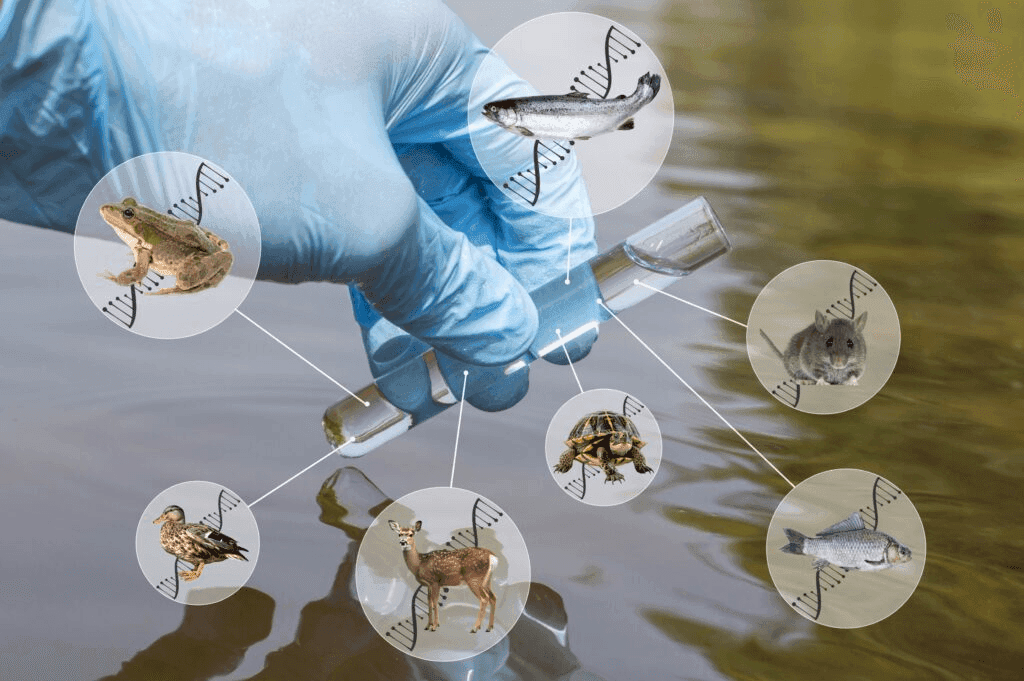
Many organisms leave behind evidence even when they are not directly visible. Fish shed cells into water, mammals leave hair and skin particles, insects leave genetic traces, and plants release pollen or organic material into the environment. These traces can reveal the presence of species that may never be seen during a field visit.
This is where environmental DNA, or eDNA, is transforming biodiversity monitoring. Instead of only looking for organisms directly, scientists can collect samples from water, soil, sediment, or air and analyse the genetic material left behind. The U.S. Geological Survey describes eDNA as genetic material that organisms leave in their environment, which can be used to detect species without seeing or capturing them.
This hidden biodiversity matters because unseen species can indicate ecosystem risk. The early presence of an invasive species may signal a future ecological threat, while the absence of sensitive native species may indicate habitat stress, water quality decline, or ecosystem degradation.
For businesses, conservation organisations, and investors, eDNA helps move biodiversity monitoring from visible observation to measurable risk intelligence. It makes hidden ecological signals easier to detect, interpret, and connect with ecosystem health.
What eDNA Means
Environmental DNA (eDNA) refers to genetic material collected from the environment rather than directly from an organism. This DNA may originate from skin cells, scales, feathers, pollen, faeces, mucus, roots, or other biological traces released into water, soil, sediment, or air.
In practice, eDNA monitoring involves collecting environmental samples, extracting DNA, sequencing or testing the genetic material, and comparing the results with reference databases to identify which species are likely to be present.
Compared with traditional biodiversity surveys, eDNA offers several distinct advantages.
- Species detection
Traditional monitoring depends on directly seeing, hearing, or capturing organisms in the field. eDNA instead detects genetic traces left behind in water, soil, sediment, or air, making it possible to identify species without direct observation.
- Suitable species
Field surveys are generally most effective for visible and easily identifiable species. eDNA is particularly valuable for detecting rare, elusive, aquatic, nocturnal, invasive, or otherwise difficult-to-observe organisms.
- Detection limitations
Traditional surveys may miss species because of seasonal behaviour, limited field access, or survey timing. eDNA can reveal species presence even when individuals are not directly observed, reducing these observational gaps.
- Type of information
Field surveys provide valuable ecological context and behavioural interpretation. eDNA complements this by offering sensitive, non-invasive evidence of species presence that strengthens biodiversity monitoring and ecological assessment.
Rather than replacing traditional ecological methods, eDNA adds another layer of evidence that improves species detection and supports more comprehensive biodiversity monitoring. Research reviewed in Biodiversity and Conservation also highlights eDNA as an important tool for species detection and biodiversity monitoring.
Why Traditional Monitoring Misses Hidden Biodiversity
Traditional biodiversity surveys are often limited by time, access, and species behaviour. A field team may survey a site during a fixed window, but many ecological signals appear outside that window, such as night-time activity, seasonal movement, or short-lived breeding events.
Some organisms are also difficult to detect through visual methods. Juvenile species, cryptic species, microbes, aquatic organisms, and low-density populations may go unnoticed even in well-designed surveys. This can create blind spots in biodiversity assessment.
eDNA helps reduce these gaps by detecting genetic traces left behind in the environment. Water samples from a river can reveal fish, amphibians, molluscs, or invasive species. Soil samples can indicate microbial communities, plants, fungi, or invertebrates. Airborne eDNA is also emerging as a way to detect biodiversity from particles suspended in the air.
This does not mean eDNA replaces field ecology. It strengthens field-based monitoring by adding another layer of evidence.
How eDNA Works
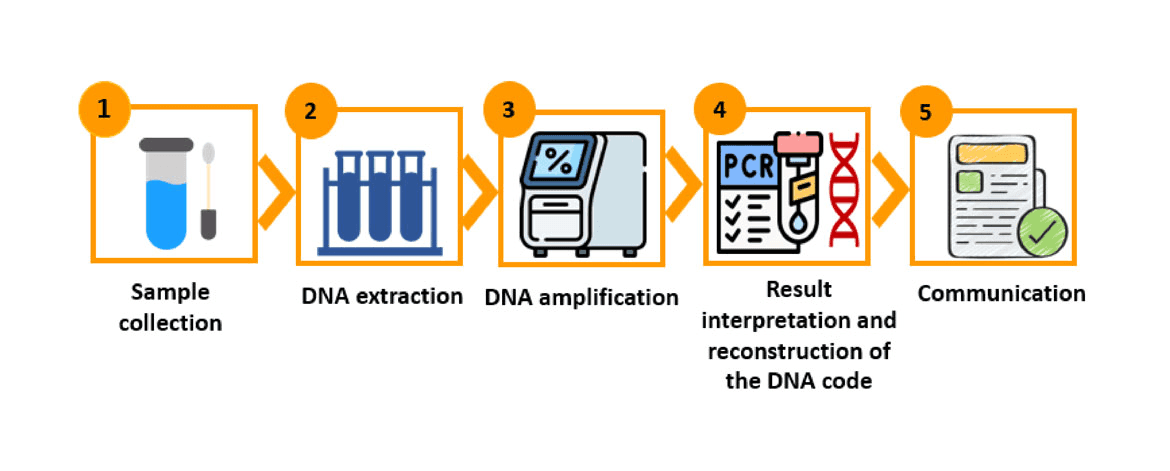
The eDNA process converts invisible biological traces into measurable biodiversity information. Although specific laboratory methods vary depending on the ecosystem and monitoring objective, the overall workflow follows a consistent sequence from sample collection to species identification.
A typical eDNA workflow includes:
- Collecting samples from water, soil, sediment, or air
- Filtering or preserving samples to capture genetic material
- Extracting DNA under controlled laboratory conditions
- Amplifying or sequencing target DNA regions
- Comparing genetic sequences with reference databases
- Interpreting species presence and broader biodiversity patterns
Quality control is fundamental throughout this process. Even small amounts of contamination can influence results, making standardised sampling protocols, clean equipment, control samples, laboratory procedures, and documented handling practices essential for producing reliable ecological evidence.
The USGS has also noted that eDNA can support rapid and standardised species distribution monitoring, especially for small, rare, secretive, or hard-to-detect species.
For example, researchers monitoring an invasive fish species may collect water samples from multiple locations within a lake. Detecting that species' DNA can indicate that it is present, or was recently present, even before individuals are observed directly. This ability to identify species at an early stage makes eDNA particularly valuable for invasive species management and biodiversity monitoring.
What eDNA Can Detect
eDNA can be used to detect a wide range of ecological information depending on sampling design, sequencing method, and reference database quality.
It can help identify:
- Rare or endangered species
- Invasive species
- Aquatic biodiversity
- Microbial communities
- Fish, amphibians, molluscs, and invertebrates
- Plant and fungal communities
- Ecosystem community composition
One of the strongest uses of eDNA is early detection. Invasive species are often difficult to control once they become established. eDNA can help detect them when populations are still low, allowing faster management response. The USGS has used eDNA in the context of invasive species detection and aquatic ecosystem management.
eDNA also supports ecosystem-level interpretation. For example, repeated sampling in a wetland may show shifts in aquatic community composition, indicating changes in water quality or habitat condition. A decline in sensitive native species and an increase in tolerant or invasive species may signal habitat degradation. In restoration projects, the return of native fish, amphibians, or microbial diversity can help show whether ecological conditions are improving.
This makes eDNA valuable not only for species detection, but also for monitoring restoration outcomes, identifying ecosystem stress, and understanding biodiversity change over time.
eDNA Metrics and Biodiversity Intelligence
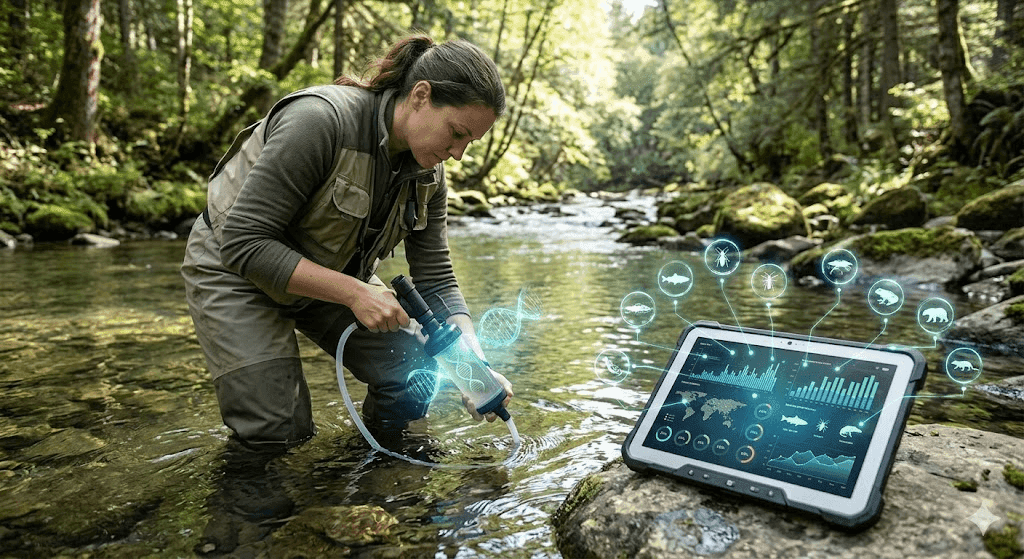
eDNA becomes most valuable when species detections are translated into measurable biodiversity indicators that support ecological assessment and decision-making. Rather than simply confirming species presence, these indicators help organisations understand ecosystem condition, monitor change over time, and evaluate the effectiveness of conservation or restoration activities.
Useful eDNA-based indicators may include:
- Species presence or absence
- Species richness across sampling sites
- Community composition
- Detection frequency over time
- Invasive species presence
- Rare or threatened species detection
- Microbial and aquatic ecosystem indicators
For example, repeated eDNA sampling within a restored wetland may reveal increasing native amphibian detections, improving aquatic species richness, and declining invasive species signals across multiple monitoring periods. This provides much stronger evidence of ecological recovery than a single field survey conducted at one point in time.
When analysed over time, these indicators help organisations prioritise restoration activities, identify invasive species risks, protect sensitive habitats, and determine whether interventions are delivering measurable ecological improvements.
eDNA and Digital MRV
As biodiversity data becomes linked to ESG reporting, biodiversity credits, restoration validation, and nature-related disclosures, monitoring systems must be measurable, verifiable, and audit-ready. This is where eDNA can contribute to digital MRV.
Digital MRV, or digital Measurement, Reporting, and Verification, uses technology to create traceable evidence of environmental outcomes. eDNA supports this by generating biodiversity records linked to specific samples, sites, dates, laboratory methods, and species detections.
For eDNA to support credible MRV, the process must be repeatable and standardised. Sampling protocols, lab methods, data handling, and interpretation workflows should be clearly documented. Chain of custody is also important, as it shows how each sample was collected, stored, transferred, processed, and analysed.
The value of eDNA in MRV is especially strong when sampling is repeated over time. A single sample may show what was detected at one moment, but repeated sampling can show whether biodiversity indicators are improving, declining, or remaining stable.
This makes eDNA useful for audit-ready biodiversity monitoring. Instead of relying only on observation-based claims, organisations can show genetic evidence collected through standardised and traceable workflows.
The Darukaa Perspective
At Darukaa, eDNA is viewed as one component of a broader environmental intelligence framework rather than as a standalone biodiversity monitoring technique. Its value lies in strengthening ecological understanding by revealing species that may otherwise remain undetected and integrating this information with complementary environmental datasets.
Darukaa combines eDNA with bioacoustic monitoring, satellite analytics, geospatial intelligence, environmental sensors, and field validation within a unified biodiversity intelligence system. While eDNA provides genetic evidence of species presence, bioacoustics captures patterns of species activity through ecosystem soundscapes. Satellite imagery and geospatial analysis monitor habitat quality, land-use change, ecosystem connectivity, and landscape fragmentation, while environmental sensors provide additional context on site conditions such as temperature, humidity, soil moisture, and water availability.
Continuous time-series analysis enables organisations to monitor biodiversity trends, ecosystem recovery, habitat change, and species dynamics across seasons and restoration cycles. Field observations strengthen interpretation and provide ecological validation for digital monitoring outputs.
The result is site-level biodiversity intelligence that supports restoration planning, biodiversity impact assessment, nature-related risk management, MRV readiness, and TNFD-aligned reporting. Rather than relying on isolated ecological observations, organisations gain access to continuously updated environmental insights that improve both reporting credibility and environmental decision-making.
From Invisible Signals to Decision Intelligence
The greatest value of eDNA lies not simply in detecting species, but in helping organisations understand what those detections mean for ecosystem management, biodiversity risk, and long-term environmental performance.
For example, early detection of an invasive fish species through eDNA sampling enables project teams to intervene before the species becomes widely established, reducing ecological damage and management costs. Similarly, repeated eDNA sampling within a restoration project may demonstrate increasing detections of native amphibians or aquatic species across multiple monitoring periods, providing evidence that ecosystem conditions are improving.
These insights become increasingly valuable when combined with geospatial analysis, habitat information, bioacoustic monitoring, and field observations. Together, they enable organisations to interpret biodiversity trends more accurately, prioritise conservation actions, assess nature-related risks, and evaluate restoration outcomes with greater confidence.
Rather than functioning solely as a laboratory technique, eDNA becomes part of a broader environmental intelligence system that supports biodiversity impact assessment, restoration planning, compliance readiness, and evidence-based decision-making.
Why eDNA Matters for Business and Policy
Biodiversity monitoring is no longer limited to conservation organisations. Companies in infrastructure, energy, agriculture, mining, water, real estate, and supply chains are increasingly expected to understand how their operations affect nature and how ecosystem change can affect business performance.
Frameworks such as the Taskforce on Nature-related Financial Disclosures are increasing demand for decision-useful biodiversity data. Businesses need to know where they depend on ecosystems, where they create biodiversity pressure, and how nature-related risks may influence operations.
eDNA can support this shift by providing scalable and non-invasive evidence of hidden biodiversity. It can help organisations identify sensitive habitats, track restoration outcomes, detect invasive species, and support biodiversity reporting.
For enterprises and investors, this matters because biodiversity loss can create supply-chain dependencies, ecosystem-related operational risks, and long-term resilience challenges. For example, declining aquatic biodiversity may indicate water quality stress, while invasive species detection may signal future management costs or regulatory exposure.
For policymakers, eDNA can improve monitoring of rivers, wetlands, protected areas, and invasive species pathways. It can also support faster biodiversity assessment across large or difficult-to-monitor landscapes, making it useful for conservation planning and resilience-based investment decisions.
The Way Forward
eDNA is changing biodiversity monitoring by making previously hidden ecological information measurable and accessible. It enables organisations to detect rare species, identify invasive organisms at an early stage, and monitor changes in ecosystem composition with greater sensitivity than many traditional approaches.
Its greatest value, however, lies in integration. eDNA is most effective when combined with field surveys, bioacoustic monitoring, remote sensing, geospatial intelligence, and environmental sensors to create a more comprehensive understanding of ecosystem health.
The future of biodiversity monitoring will depend on integrated environmental intelligence systems capable of combining multiple ecological signals into measurable, traceable, and decision-ready insights. By connecting genetic evidence with habitat condition, ecosystem dynamics, and long-term monitoring, organisations can strengthen biodiversity reporting, improve conservation planning, and make more informed environmental decisions.
FAQs
1. What is eDNA in simple terms?
eDNA, or environmental DNA, is genetic material that organisms leave behind in water, soil, air, or sediment.
2. How does eDNA help biodiversity monitoring?
eDNA helps detect species without directly seeing or capturing them, making it useful for rare, hidden, or aquatic organisms.
3. What can eDNA detect?
eDNA can detect fish, amphibians, invertebrates, plants, fungi, microbes, invasive species, and endangered species.
4. Is eDNA better than traditional surveys?
eDNA complements traditional surveys by detecting hidden species and improving biodiversity evidence, but field validation is still important.
5. Where is eDNA collected from?
eDNA can be collected from water, soil, sediment, and increasingly from air samples.
6. How is eDNA analysed?
Samples are collected, DNA is extracted, sequenced or tested, and compared with reference databases to identify species.
7. Can eDNA detect invasive species?
Yes, eDNA is especially useful for early detection of invasive species before populations become visible or widespread.
8. How does eDNA support biodiversity credits?
eDNA provides measurable and traceable biodiversity evidence that can support monitoring, reporting, and verification.
9. What are the limitations of eDNA?
eDNA can be affected by DNA movement, degradation, contamination, and reference database quality, so validation is important.
10. How does Darukaa use eDNA?
Darukaa can integrate eDNA with bioacoustics, remote sensing, geospatial intelligence, and field data to create biodiversity intelligence.